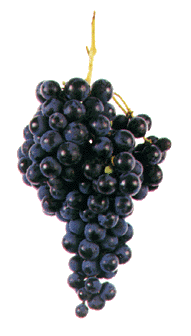
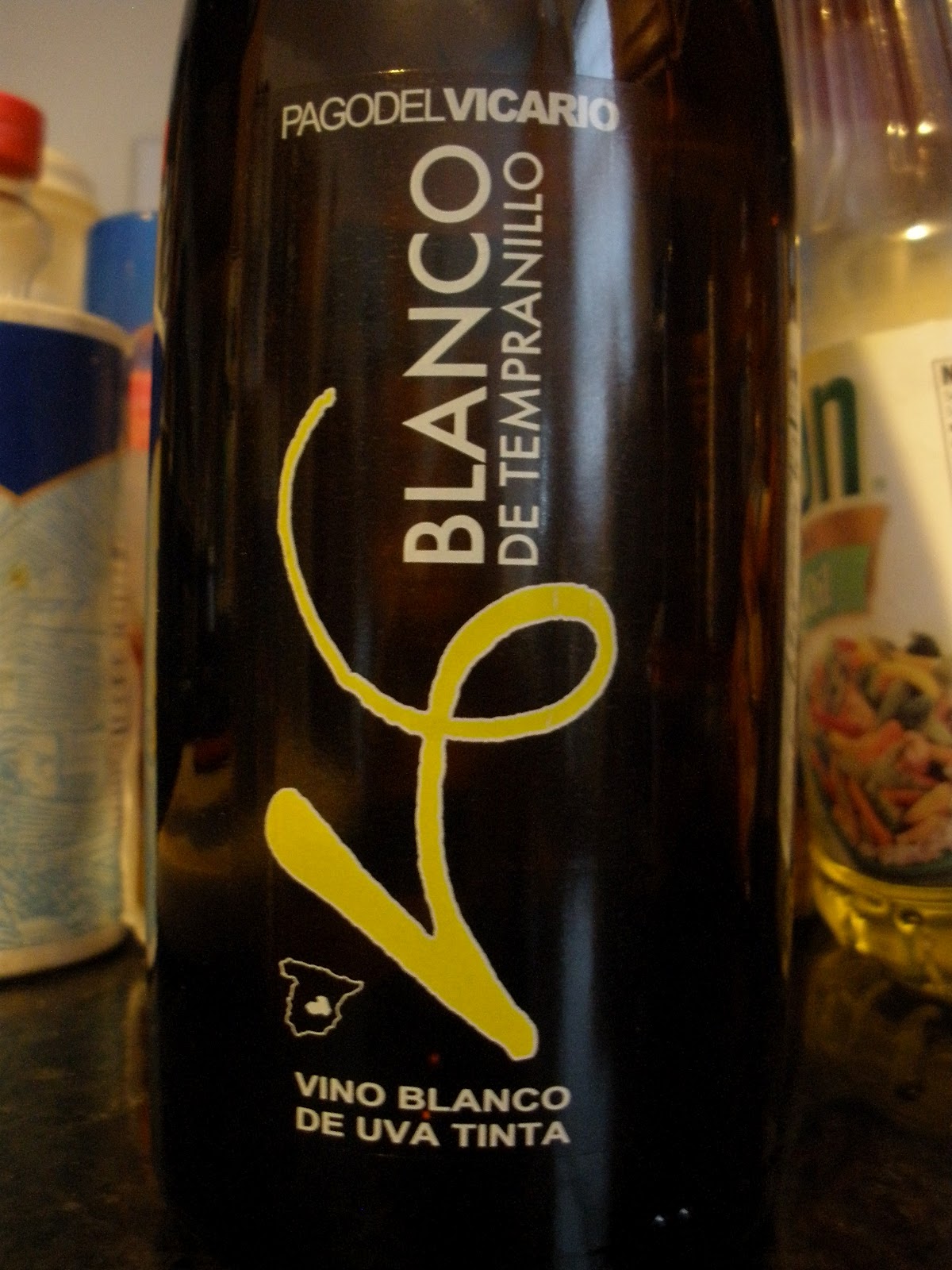
Hello everyone and welcome to another edition of Odds and Ends, where I write about interesting wines that I've tried lately which I don't think merit a full post on their own. All of the wines I'll be writing about today are made from grapes that I've already written extensively about in the past and those relevant links will be included in each write-up. Additionally, all of the wines I'll be looking at today are imported by my good friend Paul Turina, whose new and improved company website can be perused here. I profiled Paul and his company about a year ago (read here) and have since tried a handful of wines from various producers that he imports. All of the wines I'll be writing about below were provided to me as samples by Paul, but all opinions expressed are entirely my own and I have received no compensation for any of the reviews below other than the wines themselves.
About a month after I first met Paul, I was introducing him to some people in the Boston area to try and get his wines distributed here (he is still looking for a Massachusetts distributor, so if anyone is interested, please email him). One of the wines he poured at a meeting that I accompanied him to was this sparkling pink wine made by some distant relatives of his around Lake Garda in Italy. I wasn't able to get a note written on the wine (unlike the sparkling Turbiana he also brought which I wrote about here), but I remember enjoying it quite a bit. I asked him a few weeks ago if he still had any around and he said he had a few bottles from a recent shipment. He handed the bottle off to me the next time he was in town and I promptly popped the cork on it. It's a non-vintage, tank-fermented sparkling wine that is made from about 50% Groppello and 50% Marzemino and retail on the bottle (from Paul's website) is about $17. In the glass the wine was a medium salmon pink color with fine steady bubbles. The nose was fairly intense with aromas of fresh cut strawberry, red cherry, watermelon and pink bubblegum. On the palate the wine was on the lighter side of medium with fairly high acidity. It was dry and tasted like cut watermelon and strawberries with a touch of red cherry. It finished with a clean, almost quinine-like bitterness. It's a fun wine, but it's well structured enough to be serious as well. I drank it around Valentine's Day and it's the perfect wine for that occasion.
His distant Italian relatives not only make wines from Groppello and Turbiana, but also from the Marzemino grape, which I wrote about around a year and a half ago. Paul recently let me try his family's 2009 Marzemino from the Brescia region of Lombardy on the western shore of Lake Garda. In the glass the wine was a medium purple ruby color. The nose was moderately intense with aromas of sour cherry, blackberry, cocoa powder and leather. On the palate the wine was on the lighter side of medium with high acid and fairly soft tannins. There were flavors of tart cherry, blackberry, old dusty leather, black plum and cocoa powder. It was a little lean, but it made up for it with a nice, bright, racy streak of acidity. As I said in my previous post, Marzemino seems like a grape tailor-made for tomato sauces and pizza. I had this wine with a big plate of spaghetti and it was a near perfect match. While I'm not as fond of Marzemino in general as Don Giovanni was, I do like it in the right circumstances and this is a very well made example.
Paul imports wine from a number of different regions in Italy and from a number of different producers. I've taken a look at some of his producers making wines from Vespaiola, Grechetto and Sagrantino in the past, but today I'd like to take a look at a couple of wines from a producer he works with in Friuli called Petrussa. Petrussa is located in the Colli Orientali del Friuli region of northeastern Italy and they deal with many of the grapes that are common to that region. One of them is Friulano, which we took a look at about a year ago. This particular bottling is from the 2009 vintage. In the glass the wine was a medium lemon gold color. The nose was fairly reserved with aromas of white pear, lilac and eucalyptus. On the palate the wine was on the fuller side of medium with fairly low acidity and a kind of oily mouthfeel. There were flavors of eucalyptus, pear and lime with a kind of stewed vegetable quality that I find in many of the wines made from the Friulano grape. This is a well-made wine, but it's a grape that I just can't fall in love with.
The next wine from Petrussa that I tried was made from the Schioppettino grape, which I did like quite a bit when I was able to try it before. This particular wine was from the 2008 vintage and in the glass it was a medium purple ruby color. The nose was moderately intense with aromas of black cherry, plum, fresh turned earth, damp leaves and leather. On the palate the wine was medium bodied with high acidity and soft tannins. There were flavors of tart cherry, blackberry, old leather and wet leaves. Right after the cork was pulled, the wine was searingly, almost abrasively sour but it does round out a bit as it settles into the glass. It's bright and zippy the whole time, though, so fans of high-acid red wines probably need not apply here. The bright, tart fruits are really well balanced by the damp earthy flavors and the wine reminds me a bit of an electrified Pinot Noir. It needs food and it needs high acid food so anything with tomato sauce would go quite nicely here.
A blog devoted to exploring wines made from unusual grape varieties and/or grown in unfamiliar regions all over the world. All wines are purchased by me from shops in the Boston metro area or directly from wineries that I have visited. If a reviewed bottle is a free sample, that fact is acknowledged prior to the bottle's review. I do not receive any compensation from any of the wineries, wine shops or companies that I mention on the blog.
Showing posts with label Rosé Wine. Show all posts
Friday, March 1, 2013
Monday, February 25, 2013
Sciacarello (Mammolo) - Ajaccio, Corsica, France
One of my favorite kinds of Fringe Wines are those made from grapes that are somewhat common in certain blended wines, but which are rarely found playing the star role. As I mentioned in my post on Susumaniello, blending grapes usually get their reputation by having one or two very nice qualities, but by also being somewhat deficient in several other areas. A grape may have a nice aroma and good color, but may be low in acid or excessively high in tannins so if you can find another grape with good acid and a soft body but which lacks perfume and is lightly colored, the two of them together can create a well-balanced wine. Though I generally focus on varietal wines for this blog, that's mostly a decision made on the nature of the content that I write about and not a personal preference. I enjoy varietal wines, but some of my favorite wines in the world are blends, and I try to represent that section of the wine world, when I can, in my erratic Weird Blend Wednesday feature. Since the focus of this site has really shifted more to individual grape varieties, though, it stands to reason that the majority of my posts deal with varietal wines.
All of which kind of takes me away from what I really wanted to talk about today, which was varietal wines made from traditional blending grapes. Sometimes blending grapes really are useful only for the handful of attributes that they can contribute to a blend, but sometimes they just need a little change of scenery in order to show their true colors. Carmenere, for instance, was a very minor component in Bordeaux blends for many years, but when the grape was exported to Chile and growers figured out how to work with it there, it became a star grape in its new home. Malbec has a similar story, though it was a star player in a little area called Cahors before hitting it big in Argentina. Even Cabernet Sauvignon and Merlot, the two king red grapes of the New World, were originally blending components of the great wines of Bordeaux, though they certainly played a more prominent role in those wines than Carmenere or Malbec ever did.
Which brings us to today's grape, which is one that a lot of people may have had at some point or another, but very few have had in a starring role. It is known in Tuscany as Mammolo and it was once a crucial part of the Chianti blend. It has been known in Tuscany since the early 17th Century under a variety of names, all of which relate in some form or another to the many different morphological characteristics of the many clones that are out there. There's Mammolo Piccolo, Mammolo Grosso, Mammolo Asciuto and Mammolo Tonda, among many others. The Mammolo part of the name is thought to come from the Italian name for violets, Viola mammola, because of the perfumed quality that the grapes can impart to a finished wine. It was once widely planted throughout Tuscany, but its numbers have been on the decline and as of the 2000 agricultural census, there were less than 150 hectares (360 acres) under vine in all of Italy.
Off the western coast of Italy is the island of Corsica which technically belongs to France, but which is closer geographically and culturally to Italy. We paid a brief visit to Corsica a few months back to take a look at a blended wine made mostly from a grape they call Nieullccio, but which happens to be none other than Sangiovese. That particular wine also had a dollop of something called Sciacarello in it, which recent DNA testing (citation 1) has shown to be none other than the Mammolo of Tuscany (there is another Corsican grape called Malvasia Montanaccio which is also identical to Sciacarello and Mammolo, but that name is far less common than the others). Like Sangiovese, it is thought that Sciacarello was brought to Corsica from the Italian mainland, and the fact that it has parent-offspring relationships with several other Tuscan grapes (none of which are widely known today) seems to back this theory up. The name Sciacarello means "crunchy," but I'm not really sure how that adjective fits in with the grape itself. Sciacarello is currently grown on just under 800 hectares of land (just under 2,000 acres) throughout the island of Corsica, though much of it, including both wines I'll be taking a look at today, is around the area of Ajaccio on the western part of the island.
I was able to find two Corsican wines from the same producer, but in two very different styles. The first was the 2011 rosé from the Domaine Comte Abbatucci, which is 100% Sciacarellu (the local spelling of the grape's name), and which I picked up for around $30 from my friends at the Wine Bottega. In the glass the wine was a very pale salmon-pink color. The nose was fairly intense and very leesy with aromas of cheese and strawberry and little else. On the palate the wine was medium bodied with fairly high acidity. The pronounced leesy, cheesy character followed through on the palate and was joined by some tart strawberry and cherry fruits with a bit of a stony mineral finish. The fruits were strangled at room temperature, but as the wine approached cellar temp, they began to open up a little bit and the strong aroma and flavor of cheese began to fade into the background. It's a well structured, but somewhat austere wine that I had a hard time falling in love with. At $30 a bottle, it's probably not something I'll be reaching for on a regular basis.
The other wine that I was able to try was the 2010 Domaine Comte Abbatucci red wine, which is 70% Sciacarellu and 30% Nieulluccio, and which I picked up for around $37 from Marty's in Newton. In the glass the wine was a fairly light purple ruby color. The nose was moderately intense with aromas of wild, brambly red fruit like red cherry and raspberry along with some dried leaves, underbrush and leather. I thought I may have picked up a hint of violet, but it could have been my imagination running away with me. On the palate the wine was medium bodied with fairly high acidity. There were flavors of red cherry, raspberry, sour plum, dusty leather, cigar tobacco and damp tea leaves. The wine reminded me more of Pinot Noir than Chianti and while I found it enjoyable enough, I thought that the nearly $40 price tag was a bit too steep for what you get here. If this wine's price were slashed in half, then I think you might be a bit closer, but it's always very difficult to assign an exact price to a wine's experience. If money is no object, then this is a very lovely bottle from a grape that is becoming increasingly harder to find in a starring role.
CITATION
Di Vecchi Staraz, M, et al. 2007. Genetic structuring and parentage analysis for evolutionary studies in grapevine: kingroup and origin of cv. Sangiovese revealed. Journal of the American Society for Horticultural Science, 132(4), pp. 514-24.
All of which kind of takes me away from what I really wanted to talk about today, which was varietal wines made from traditional blending grapes. Sometimes blending grapes really are useful only for the handful of attributes that they can contribute to a blend, but sometimes they just need a little change of scenery in order to show their true colors. Carmenere, for instance, was a very minor component in Bordeaux blends for many years, but when the grape was exported to Chile and growers figured out how to work with it there, it became a star grape in its new home. Malbec has a similar story, though it was a star player in a little area called Cahors before hitting it big in Argentina. Even Cabernet Sauvignon and Merlot, the two king red grapes of the New World, were originally blending components of the great wines of Bordeaux, though they certainly played a more prominent role in those wines than Carmenere or Malbec ever did.
Which brings us to today's grape, which is one that a lot of people may have had at some point or another, but very few have had in a starring role. It is known in Tuscany as Mammolo and it was once a crucial part of the Chianti blend. It has been known in Tuscany since the early 17th Century under a variety of names, all of which relate in some form or another to the many different morphological characteristics of the many clones that are out there. There's Mammolo Piccolo, Mammolo Grosso, Mammolo Asciuto and Mammolo Tonda, among many others. The Mammolo part of the name is thought to come from the Italian name for violets, Viola mammola, because of the perfumed quality that the grapes can impart to a finished wine. It was once widely planted throughout Tuscany, but its numbers have been on the decline and as of the 2000 agricultural census, there were less than 150 hectares (360 acres) under vine in all of Italy.
Off the western coast of Italy is the island of Corsica which technically belongs to France, but which is closer geographically and culturally to Italy. We paid a brief visit to Corsica a few months back to take a look at a blended wine made mostly from a grape they call Nieullccio, but which happens to be none other than Sangiovese. That particular wine also had a dollop of something called Sciacarello in it, which recent DNA testing (citation 1) has shown to be none other than the Mammolo of Tuscany (there is another Corsican grape called Malvasia Montanaccio which is also identical to Sciacarello and Mammolo, but that name is far less common than the others). Like Sangiovese, it is thought that Sciacarello was brought to Corsica from the Italian mainland, and the fact that it has parent-offspring relationships with several other Tuscan grapes (none of which are widely known today) seems to back this theory up. The name Sciacarello means "crunchy," but I'm not really sure how that adjective fits in with the grape itself. Sciacarello is currently grown on just under 800 hectares of land (just under 2,000 acres) throughout the island of Corsica, though much of it, including both wines I'll be taking a look at today, is around the area of Ajaccio on the western part of the island.
I was able to find two Corsican wines from the same producer, but in two very different styles. The first was the 2011 rosé from the Domaine Comte Abbatucci, which is 100% Sciacarellu (the local spelling of the grape's name), and which I picked up for around $30 from my friends at the Wine Bottega. In the glass the wine was a very pale salmon-pink color. The nose was fairly intense and very leesy with aromas of cheese and strawberry and little else. On the palate the wine was medium bodied with fairly high acidity. The pronounced leesy, cheesy character followed through on the palate and was joined by some tart strawberry and cherry fruits with a bit of a stony mineral finish. The fruits were strangled at room temperature, but as the wine approached cellar temp, they began to open up a little bit and the strong aroma and flavor of cheese began to fade into the background. It's a well structured, but somewhat austere wine that I had a hard time falling in love with. At $30 a bottle, it's probably not something I'll be reaching for on a regular basis.
The other wine that I was able to try was the 2010 Domaine Comte Abbatucci red wine, which is 70% Sciacarellu and 30% Nieulluccio, and which I picked up for around $37 from Marty's in Newton. In the glass the wine was a fairly light purple ruby color. The nose was moderately intense with aromas of wild, brambly red fruit like red cherry and raspberry along with some dried leaves, underbrush and leather. I thought I may have picked up a hint of violet, but it could have been my imagination running away with me. On the palate the wine was medium bodied with fairly high acidity. There were flavors of red cherry, raspberry, sour plum, dusty leather, cigar tobacco and damp tea leaves. The wine reminded me more of Pinot Noir than Chianti and while I found it enjoyable enough, I thought that the nearly $40 price tag was a bit too steep for what you get here. If this wine's price were slashed in half, then I think you might be a bit closer, but it's always very difficult to assign an exact price to a wine's experience. If money is no object, then this is a very lovely bottle from a grape that is becoming increasingly harder to find in a starring role.
CITATION
Di Vecchi Staraz, M, et al. 2007. Genetic structuring and parentage analysis for evolutionary studies in grapevine: kingroup and origin of cv. Sangiovese revealed. Journal of the American Society for Horticultural Science, 132(4), pp. 514-24.
Friday, January 11, 2013
Odds and Ends - Sparkling Malbec, Botrytized Rkatsiteli, White Pinot Noir, Rufete Rosado and Pignoletto Redux
Today I'd like to introduce a new erratic feature where I provide a few tasting notes for some unusual wines that I've come across lately that I either don't want to write a whole post about or which feature grapes that I've already written a full post about and just don't want to fully revisit. The former group mostly features wines made from common grapes but made in unusual styles and while I enjoy drinking these wines, I find that I don't have much to say about them, so when I go to write a new post, I tend to skip over those entries in my tasting notebook for those featuring novel grapes. I'm starting to accumulate quite a few notes like that, though, so I decided to unload some of them here. I also have a tendency to buy bottles made from unusual grapes I've already covered here so that I can compare them to the wines I've previously written about. I used to just updat those prior posts with these new tasting notes, but since new posts get more readers than old ones, I thought that those notes may be missed by many readers, so I decided to include them in this little feature as well.
The first wine I'd like to write about is the NV Domaine Augis "La Rosée" sparkling Malbec from the Valency region of the Loire Valley in France. Though Malbec is currently the superstar grape of Argentina, its original home is France and in many French areas, including this one, the grape is known as Côt. This is a traditional method rosé sparkler that I picked up for around $17 from my friends at the Wine Bottega. In the glass the wine was a fairly deep violet pink color with vigorous bubbles. The nose was somewhat reserved with aromas of fresh cut strawberries and crushed raspberries. On the palate the wine was light bodied with fairly high acidity and smooth, creamy bubbles. There were flavors of bitter cherry, fresh strawberry, red currant and crushed red berries. I found the wine very clean and refreshing and enjoyed it with a pan seared swordfish steak. I think it's a tremendous value for a traditional method sparkler at less than $20 a bottle and would recommend it unreservedly.
The next wine I'd like to talk about is the 2006 Satrapezo "Gviani," which is a dessert wine made from botrytized Rkatsiteli grapes (retail around $30 for 375 mL). I've written about Rkatsiteli many times (here and here and here), but this is the first dessert wine made from the grape that I've been able to try. The grapes for this wine were grown on the banks of the Alazanis river in Georgia where mists and morning dew from the river combined with warm afternoon sun provide the ideal conditions for the development of botrytis cinerea, which is perhaps better known as noble rot. This fungus infects the berries by piercing the grape's skin, causing much of the water in the berry to evaporate, leaving a dense, sticky, sugary liquid behind. This liquid is fermented as much as possible and, in this case, aged for a short time in oak barrels prior to bottling. In the glass the wine was a fairly deep lemon gold color. The nose was fairly reserved with aromas of apricot, mint, orange marmalade, vanilla and pineapple. On the palate the wine was full bodied with fairly high acidity. It was very sweet with flavors of apricot, orange marmalade, honey, red grapefruit and peach cobbler with a clean, minty finish. I found this wine pretty shut down at fridge temp, but much more generous and open at cellar temp. I enjoyed this wine and thought it was a reasonable value, but it really lacked the complexity of fine Sauternes or BA/TBA wines from Germany. Fans of botrytized wines should probably check this out, but connoisseurs may want to skip it.
Next up is the 2008 Trenz Spätburgunder Blanc de Noir from the Rheingau region of Germany, which I picked up from my friends at Curtis Liquors for around $18. Spätburgunder is the German word for Pinot Noir and while German Pinot Noir certainly isn't that unusual, white wines made from the grape are. I took a look at a Cabernet Franc wine (and a Nebbiolo wine) made using this method a few months back so readers looking for technical information on how the wine is made are referred to the Cab Franc post. In the glass the wine was a medium lemon gold color. The nose was fairly intense with funky, leesy aromas of candied strawberry, watermelon and candied apple. It smelled more like a rosé than a white wine, which is what I also found in that Blanc de Franc. On the palate the wine was medium bodied with fairly high acidity. It was off-dry with honey, peach, candied strawberry, candied green apple and lemon curd flavors. It was bright and zippy and walked that line between sweet and tart that the Germans are so fond of exploring. I've had a few other Blanc de Noir style Pinot Noir table wines before, but this is definitely the best that I've ever had.
Next up is the 2008 Vina Salamanca Rufete rosado, which I also picked up from Curtis Liquors for around $13. I wrote about the Rufete grape a few years back, but at the time, the only wine I could find containing the grape was 50% Rufete and 50% Tempranillo. This wine is from the same producer, but is made from 100% Rufete grapes. In the glass the wine was a light salmon pink color. The nose was moderately intense with funky, leesy aromas of strawberry and not much else. On the palate this wine was on the lighter side of medium with fairly high acidity. There were flavors of red cherry, fresh cut strawberry, raspberry and a touch of leesy funk. This wine was definitely in decline a bit as it was a few years old by the time I got my hands on it, but it was still crisp, fruity and refreshing, which is all I really ask of my pink wines. I know that there are red wines made from the Rufete grape out there, but I have been unable to track any of them down thus far. When I finally do, you can bet that tasting note will be up on the site somewhere.
The final wine that I'd like to write about was the 2008 Branchini Pignoletto from the Emilia-Romagna region of Italy (which I picked up at Panzano Proviste for around $18). I wrote about the Pignoletto grape a few months back and took a look at two wines from Alberto Tedeschi which were very good but were hardly what you might consider traditional. When I came across this example from Branchini, I decided to try it out to see what a regular table wine made from the grape might be like. In the glass the wine was a fairly deep lemon gold color. The nose was somewhat reserved with ripe apple, lemon and mint aromas along with something vaguely floral. On the palate the wine was on the fuller side of medium with medium acidity. There were flavors of white peach, mint and Meyer lemon with a bit of nuttiness on the finish. The citrusy lemon notes were dominant at fridge temp, but the peachy flavors woke up and became a bit more generous as the wine warmed up. This wine was probably a little over the hill, but it still provided an interesting counter point to the more avant garde efforts from Tedeschi. Overall, I thought it was OK, but probably not worth the price tag. The Tedeschi wines were much more interesting and characterful and only a few dollars more than this example, thought they're also probably more of an acquired taste.
Friday, November 2, 2012
Early Muscat - Rogue Valley, Oregon, USA
As I've mentioned many times before (such as in my posts on Emerald Riesling and Symphony), I'm a big fan of Dr. Harold Olmo. Olmo was perhaps the most prolific and successful grape breeder in the history of the United States, but he was also a leading figure in many other areas of viticulture as well. He was an early proponent of clonal selection, and this lengthy obituary (he died in 2006) of him credits him with changing California's relationship with the Chardonnay grape. For many years, Chardonnay was unpopular in California because it wasn't very productive and the wines made from it weren't that great. Olmo tested several different clonal variants of the grape to try and find more productive and higher quality vines, and it is thought that his success in this endeavor is responsible for Chardonnay's extraordinary popularity today. Whether that's a good thing or not from a taste perspective is a very different question from whether it's a good thing or not from an economic perspective Regardless of what your own personal feelings are about the Chardonnay grape, the fact remains that it has become a significant cash crop for California winemakers because the quality and the quantity of the grapes being grown is higher.
Not all of Olmo's discoveries and projects were such unequivocal successes. Many of the grapes that he created for wine production were intended to be high-cropping vines that had good disease resistance and which could be grown in some of the hotter and drier regions of California where traditional vinifera varieties were unsuccessful. Many of the grapes that he created are still grown in California today, though you rarely see any of their names on bottles because much of their production ends up as bulk wine. Some people may see this as a failure on Olmo's part or may wish to criticize him for breeding bulk wine grapes, but one must remember that this was really what he was trying to do, and he was remarkably successful at it. One should also note that while most of the production from these grapes ends up as bulk wine, some producers do try to make quality wines from them by limiting yields and carefully managing the vines in the vineyard and the results of their care can be very good in their own right.
Harold Olmo created table grapes in addition to creating wine grapes, and many of his creations can still be found on your supermarket shelves. The first few grapes that Olmo released (in 1946 and 1958) were actually table grapes, as there was a big push at this particular time to create more seedless table grapes to supplement the Thompson seedless, which, for quite some time, was actually the only seedless table grape available in the US. Many of his creations used various Muscat grapes as one of the parents (or somewhere in the pedigree), as the intense aromas and high sugar contents that the Muscat family was able to pass along to its offspring were very popular with consumers. Olmo's first grape release was the table grape Perlette in 1946 (one of whose parents was the aforementioned Thompson seedless). There were a handful of others over the next few years and then in 1958, Early Muscat was released (the actual crossing was purportedly in 1940, but quality trials take a really long time...Symphony, for example, was also first crossed in 1940 but wasn't released until 1981).
Early Muscat was created by crossing Muscat de Hamburg with a grape called Reine des Vignes in France and Koenigin der Weingaerten in German, both of which translate to "Queen of the Vineyards" (and which was the other parent for Olmo's first grape, Perlette). Reine des Vignes was created by Hungarian breeder János Mathiász in 1916 by crossing a grape called Queen Elizabeth with Pearl of Csaba (which, incidentally, is also one of the parents of Irsai Olivér). Pearl of Csaba was itself created in 1904, and one of its parents was called Muscat Courtillier, which is also known as Muscat Précoce de Saumur. The "précoce" in the name means early, and the grape is known for its early ripening and short growing season, which makes it a popular choice among grape breeders. This early ripening quality was passed along through the family tree, and, together with the Muscat flavors from its great-grandfather and its father, created the grape we now know as Early Muscat.
Early Muscat, like many of its forebears and relatives, was initially created as a table grape variety. As we discussed in my post on the Lakemont and Himrod grapes, the qualities that breeders are looking for in a table grape are rarely the same as the qualities you'd want in a wine grape. For the most part, table grapes are bred to be prolific yielders without any seeds and with very thin, mostly flavor-neutral skins. It is possible to make wine from these grapes, but it is generally inadvisable. Some winemakers do occasionally try it, though, and occasionally it works out well. A few years back, some winemakers in Oregon noticed that Early Muscat grew really well there and decided to experiment with it. It wasn't exactly a phenomenon, but these days a handful of different producers do grow the grape and make wine from it (which is, apparently, sometimes difficult to buy as consumers snatch up the wines almost as soon as they hit the shelves).
One of those producers is Del Rio Vineyards, located in the Rogue Valley of southwestern Oregon. Del Rio makes a wine called Rose Jolee, which I picked up from my friends at the Spirited Gourmet for around $10. The most recent information on the winery's website indicates that the current blend for this wine (listed as NV on the PDF, but 2011 on the actual website) was 63% Early Muscat, 17% Riesling and 20% "red blend." The 2009, which is the wine that I tried, is actually labeled Early Muscat, which means that it must have at least 90% of the stated variety in it,* though it's obvious that there's still some "red blend" in this wine because Early Muscat is a white grape and this is a fairly deep salmon pink wine with a very light fizz to it. The nose was intensely aromatic with strawberry, peach and lychee fruit along with fresh flowers and orange blossoms. On the palate the wine was medium bodied with medium acidity. It was pretty sweet with just a faint prickle of CO2. There were flavors of strawberry candy, peaches, mandarin oranges and something a bit grapey as well. The flavor profile was very fruity and kind of candy-ish, with the wine tasting a bit like cotton candy at times as well. It wasn't aggressively floral, as some Muscat-based wines can be. It's a summer slammer wine, really, that is meant to be gulped and gulped quickly for maximum enjoyment, and if you approach it with that kind of mindset, you'll probably find a lot to like about it. It's not complex or deep or profound, but it is tasty and easy to drink and I'm totally fine with that sometimes.
*Remember that the rules are a little different in Oregon. In California and most of the rest of the US, if a variety is stated on the label, the wine only has to be composed of at least 75% of the stated variety. Oregon's laws dictate that the stated variety must make up at least 90% of the wine, which explains why the bottle on the PDF shelftalker from their website does not have any varietal designation, if the most recent bottlings are only 63% Early Muscat.
Not all of Olmo's discoveries and projects were such unequivocal successes. Many of the grapes that he created for wine production were intended to be high-cropping vines that had good disease resistance and which could be grown in some of the hotter and drier regions of California where traditional vinifera varieties were unsuccessful. Many of the grapes that he created are still grown in California today, though you rarely see any of their names on bottles because much of their production ends up as bulk wine. Some people may see this as a failure on Olmo's part or may wish to criticize him for breeding bulk wine grapes, but one must remember that this was really what he was trying to do, and he was remarkably successful at it. One should also note that while most of the production from these grapes ends up as bulk wine, some producers do try to make quality wines from them by limiting yields and carefully managing the vines in the vineyard and the results of their care can be very good in their own right.
Harold Olmo created table grapes in addition to creating wine grapes, and many of his creations can still be found on your supermarket shelves. The first few grapes that Olmo released (in 1946 and 1958) were actually table grapes, as there was a big push at this particular time to create more seedless table grapes to supplement the Thompson seedless, which, for quite some time, was actually the only seedless table grape available in the US. Many of his creations used various Muscat grapes as one of the parents (or somewhere in the pedigree), as the intense aromas and high sugar contents that the Muscat family was able to pass along to its offspring were very popular with consumers. Olmo's first grape release was the table grape Perlette in 1946 (one of whose parents was the aforementioned Thompson seedless). There were a handful of others over the next few years and then in 1958, Early Muscat was released (the actual crossing was purportedly in 1940, but quality trials take a really long time...Symphony, for example, was also first crossed in 1940 but wasn't released until 1981).
Early Muscat was created by crossing Muscat de Hamburg with a grape called Reine des Vignes in France and Koenigin der Weingaerten in German, both of which translate to "Queen of the Vineyards" (and which was the other parent for Olmo's first grape, Perlette). Reine des Vignes was created by Hungarian breeder János Mathiász in 1916 by crossing a grape called Queen Elizabeth with Pearl of Csaba (which, incidentally, is also one of the parents of Irsai Olivér). Pearl of Csaba was itself created in 1904, and one of its parents was called Muscat Courtillier, which is also known as Muscat Précoce de Saumur. The "précoce" in the name means early, and the grape is known for its early ripening and short growing season, which makes it a popular choice among grape breeders. This early ripening quality was passed along through the family tree, and, together with the Muscat flavors from its great-grandfather and its father, created the grape we now know as Early Muscat.
Early Muscat, like many of its forebears and relatives, was initially created as a table grape variety. As we discussed in my post on the Lakemont and Himrod grapes, the qualities that breeders are looking for in a table grape are rarely the same as the qualities you'd want in a wine grape. For the most part, table grapes are bred to be prolific yielders without any seeds and with very thin, mostly flavor-neutral skins. It is possible to make wine from these grapes, but it is generally inadvisable. Some winemakers do occasionally try it, though, and occasionally it works out well. A few years back, some winemakers in Oregon noticed that Early Muscat grew really well there and decided to experiment with it. It wasn't exactly a phenomenon, but these days a handful of different producers do grow the grape and make wine from it (which is, apparently, sometimes difficult to buy as consumers snatch up the wines almost as soon as they hit the shelves).
One of those producers is Del Rio Vineyards, located in the Rogue Valley of southwestern Oregon. Del Rio makes a wine called Rose Jolee, which I picked up from my friends at the Spirited Gourmet for around $10. The most recent information on the winery's website indicates that the current blend for this wine (listed as NV on the PDF, but 2011 on the actual website) was 63% Early Muscat, 17% Riesling and 20% "red blend." The 2009, which is the wine that I tried, is actually labeled Early Muscat, which means that it must have at least 90% of the stated variety in it,* though it's obvious that there's still some "red blend" in this wine because Early Muscat is a white grape and this is a fairly deep salmon pink wine with a very light fizz to it. The nose was intensely aromatic with strawberry, peach and lychee fruit along with fresh flowers and orange blossoms. On the palate the wine was medium bodied with medium acidity. It was pretty sweet with just a faint prickle of CO2. There were flavors of strawberry candy, peaches, mandarin oranges and something a bit grapey as well. The flavor profile was very fruity and kind of candy-ish, with the wine tasting a bit like cotton candy at times as well. It wasn't aggressively floral, as some Muscat-based wines can be. It's a summer slammer wine, really, that is meant to be gulped and gulped quickly for maximum enjoyment, and if you approach it with that kind of mindset, you'll probably find a lot to like about it. It's not complex or deep or profound, but it is tasty and easy to drink and I'm totally fine with that sometimes.
*Remember that the rules are a little different in Oregon. In California and most of the rest of the US, if a variety is stated on the label, the wine only has to be composed of at least 75% of the stated variety. Oregon's laws dictate that the stated variety must make up at least 90% of the wine, which explains why the bottle on the PDF shelftalker from their website does not have any varietal designation, if the most recent bottlings are only 63% Early Muscat.
Thursday, October 11, 2012
Pinotage - Stellenbosch, South Africa
Pinotage is not a grape that I would usually write about. Wines made from it are relatively common and I can usually find several examples in an average wine shop in the Boston area. It is considered by many to be the signature grape of South Africa and there's even a Pinotage Association devoted to it though, somewhat surprisingly, it only accounts for about 6% of the total plantings in South Africa. I decided to make an exception, though, in order to trot out a new feature that will probably be published erratically, but which I've been curious to try for some time: book reviews. I buy and read a lot of books on wine, many specifically for research for this site, and I thought it might be interesting to review some of them, especially since some are out of print and/or unusually expensive. I was initially planning to roll this feature out after reading the new Wine Grapes book from the OCW crew due out later this month, but I decided to move it up because it's my blog and I can do what I want.
I'm starting this new angle with a look at the Pinotage grape because I was recently contacted by Peter May after he was directed to my site via a post on a wine-related message board. Peter mentioned in his email that we shared an interest in fringe grapes and wines and that some of my posts were similar to his investigations into the Pinotage grape, which he had published in book form in 2009 (Pinotage: Behind the Legends of South Africa's Own Wine). If there's one grape that I definitely thought I wouldn't want to read about, it would be Pinotage, as I've not only disliked, but very strongly disliked every wine I've ever had from it. I went to Amazon.com to have a look at his book anyway and read the following description: "During researches in South Africa Peter F May was told information that differed from the standard definition of Pinotage in text books. Turning detective, May investigated various legends about Pinotage's parentage and origins." Whatever my thoughts were on the grape, May's angle for his book seemed to be right up my alley, so I immediately purchased the book and just finished reading it a few days ago (you can find the book on Amazon, but it is much cheaper on Lulu.com).
The book opens with May visiting South Africa on a business trip in the mid 1990's. While there, he decides to sample some of the local wines and comes away with a fondness for a grape called Pinotage. When he returned to the country the following year, he began to seek out wineries that made wine from the Pinotage grape and became more and more enamored with it. In 1997, he founded the Pinotage Club online and began to learn more about the grape. What he was finding, though, is what I have found in many of my own investigations, which is that much of the information available on the grape was conflicting, especially regarding the grape's parentage. Most people accepted that Pinotage was created by Dr. Abraham Perold in South Africa, but nobody could seem to agree on just when the grape was created, just who its parents were, or just why Dr. Perold created the grape in the first place. In the first half of Pinotage, Peter May goes about finding the answers to those questions.
May's research is thorough and his findings are very convincing. Given my interest in parentage studies for grapes, the part that most interested me was the section on finding the parents of Pinotage. In November 1924, Dr. Perold took the pollen from a Pinot Noir plant and used it to fertilize the flower of a vine called Hermitage (the name Pinotage is a portmanteau of Pinot and Hermitage). There was some question, though, over just what grape Hermitage actually was. Hermitage is a common synonym for the Syrah grape, especially in Australia, and given some of the characteristics of Pinotage wines, many believed that Syrah was the other parent. Hermitage is also a synonym for the Cinsaut grape, though, and after tracking down a copy of Dr. Perold's book A Treatise on Viticulture, May is able to show that Dr. Perold was, in fact, referring to the Cinsaut grape when using the term Hermitage.
One of the more interesting legends that May examines, and one that I wasn't familiar with, is that Pinotage is actually a hybrid vine. There are those who believe that Pinotage was not the result of a deliberate crossing of two vinifera vines, but rather an accidental crossing with a grape called Jacquez, itself a hybrid grape that was widely planted on the island of Madeira for a time after the phylloxera epidemic. The story goes that some stray pollen granules from a nearby Jacquez vine found their way to the Cinsaut flowers before Dr. Perold was able to pollinate them with Pinot Noir. Proponents of this theory pointed to characteristics of Pinotage that were seemingly absent in Pinot Noir and Cinsaut, such as thick skins, deep pigmentation and berry shape. May is ultimately able to disprove this particular legend and to prove the actual parentage of Pinotage by tracking down (and showing) the DNA data that proves without a doubt that Pinotage was the result of crossing Pinot Noir and Cinsaut.
The second half of May's book is devoted to exploring Pinotage today, and is probably aimed more at fanatics and devotees of the grape, which I admittedly am not. He looks at Pinotage in the vineyard and the winery through the lens of a few South African producers, and also examines the rising popularity of Pinotage in other countries. I was not aware that New Zealand has almost as long a history with the Pinotage as South Africa, and that many New Zealand Pinotages rival those from the grape's birthplace in terms of quality. The chapter I was most looking forward to reading is titled "Isn't it Rubbery?" as I have never been able to really enjoy Pinotage based wines because of strong burnt rubber, acetone and farmyard smells and flavors. The acetone, it turns out, is a result of fermentation temperatures (hot fermentations reduce the presence of isoamyl acetate in the finished wine), and is something that is becoming less and less of a problem. The accusation of rubberiness, though, is more difficult to explain. May points to a particularly virulent strain of brettanomyces yeast that is found in South Africa that is a possible cause of some of these flavors. I will admit that I've found many of these off-flavors in a range of wines from South Africa, not just in Pinotage, and so I buy his explanation to some extent. The Pinotage aroma wheel, created by the Pinotage Association referenced above, doesn't include rubber or acetone, though whether that's a marketing lie of omission or a good faith representation is hard to say.
As mentioned above, I've never been a fan of Pinotage based wines, but after reading May's book, I was inspired to give the grape a second chance. I decided to give Pinotage another shot in two different ways. First of all, I was going to really try to find a high-end Pinotage from a producer that was known for making exceptional wines from the grape. After reading May's book, I had a good sense of who those producers might be. Secondly, I was going to try a wine made in a slightly different style, namely a rosé wine, to see what characteristics might be present in each wine. If both wines were rubbery and nasty, I felt that I could be pretty confident that it was actually the grape itself that I was objecting to, given my previous experiences. Others may enjoy those kinds of flavors or be less sensitive to them, and that's fine, but they definitely aren't for me.
I went to one of my favorite shops, Curtis Liquors, and picked up two bottles of Pinotage, one a rosé ($15) and one a varietal wine ($35), from Kanonkop, a very highly regarded South African producer profiled in May's book. Kanonkop boasts that their winery is the South African equivalent of a Premier Cru or First Growth on their website, and I figured if these guys couldn't convince me, then I was a lost cause as far as Pinotage was concerned. I tried the rosé wine first, and it was a fairly deep pink color in the glass. The nose was fairly intense with fresh strawberry, raspberry and rainier cherry aromas. On the palate the wine was medium bodied with medium acidity. There were flavors of fresh cut watermelon and strawberry as well as some rainier cherry and a little bit of leesy funk. It clocked in at a whopping 14.5% alcohol, and wore it a little clumsily. The high alcohol gave a sweet, almost creamy kind of texture to the wine that was interesting, but it also contributed an unwelcome heat as well. All in all I found it very enjoyable and was relieved to find that none of the negative flavors I had found in previous Pinotage based wines were present here.
The true test, though, was in the varietal Pinotage that I tried next. With some trepidation, I pulled the cork on the 2004 Kanonkop Pinotage and poured myself a taste. The wine was a deep, opaque inky-purple black color in the glass. The nose was moderately intense with blackberry, blueberry, mocha and smoke aromas. There was a hint of rubberiness in the smoke, but I couldn't be totally sure that I wasn't just imagining it. On the palate the wine was full bodied with fairly high acidity and medium tannins. There were flavors of blackberry, black cherry, blueberry, smoke, baking spice, mocha, black pepper, bell pepper and a little farmyard funk. It was dense, deep and incredibly complex with the flavors rolling over the palate seamlessly. Again, I thought I might have picked up a touch of rubber, but it was very faint and didn't distract at all from the rich, ripe fruits. This wine was also 14.5% alcohol, but it carried it much more effortlessly. This was easily the best Pinotage that I had ever tasted and I found it to be an exceptional wine. If you think you hate Pinotage, try this wine. If you still don't like it, then there's probably no hope for you.
I wouldn't call myself a Pinotage convert after reading May's book and trying the wines above, but I do have a new respect for the grape and for the wines it is capable of producing. May is an eager guide, bursting with information and anecdotes, and his enthusiasm for the grape is a bit contagious. This book is a must read for fans and fanatics of the Pinotage grape, or for those interested in South African wine in general. The tone is casual and the reading is easy-going, but the information is thoroughly researched, as evidenced by the 230 endnotes scattered throughout the text. It's a fun and informative book that I very highly recommend.
As noted above, my copy of this book was purchased by me and I was not asked by Peter or his publisher to review it. My standards for book reviews are the same as for my wine reviews and all opinions expressed above are mine and mine alone. I have received no compensation for reviewing this book, and suspect that Peter may not even know that I've reviewed it until I send him an email about it in a few minutes.
I'm starting this new angle with a look at the Pinotage grape because I was recently contacted by Peter May after he was directed to my site via a post on a wine-related message board. Peter mentioned in his email that we shared an interest in fringe grapes and wines and that some of my posts were similar to his investigations into the Pinotage grape, which he had published in book form in 2009 (Pinotage: Behind the Legends of South Africa's Own Wine). If there's one grape that I definitely thought I wouldn't want to read about, it would be Pinotage, as I've not only disliked, but very strongly disliked every wine I've ever had from it. I went to Amazon.com to have a look at his book anyway and read the following description: "During researches in South Africa Peter F May was told information that differed from the standard definition of Pinotage in text books. Turning detective, May investigated various legends about Pinotage's parentage and origins." Whatever my thoughts were on the grape, May's angle for his book seemed to be right up my alley, so I immediately purchased the book and just finished reading it a few days ago (you can find the book on Amazon, but it is much cheaper on Lulu.com).
The book opens with May visiting South Africa on a business trip in the mid 1990's. While there, he decides to sample some of the local wines and comes away with a fondness for a grape called Pinotage. When he returned to the country the following year, he began to seek out wineries that made wine from the Pinotage grape and became more and more enamored with it. In 1997, he founded the Pinotage Club online and began to learn more about the grape. What he was finding, though, is what I have found in many of my own investigations, which is that much of the information available on the grape was conflicting, especially regarding the grape's parentage. Most people accepted that Pinotage was created by Dr. Abraham Perold in South Africa, but nobody could seem to agree on just when the grape was created, just who its parents were, or just why Dr. Perold created the grape in the first place. In the first half of Pinotage, Peter May goes about finding the answers to those questions.
May's research is thorough and his findings are very convincing. Given my interest in parentage studies for grapes, the part that most interested me was the section on finding the parents of Pinotage. In November 1924, Dr. Perold took the pollen from a Pinot Noir plant and used it to fertilize the flower of a vine called Hermitage (the name Pinotage is a portmanteau of Pinot and Hermitage). There was some question, though, over just what grape Hermitage actually was. Hermitage is a common synonym for the Syrah grape, especially in Australia, and given some of the characteristics of Pinotage wines, many believed that Syrah was the other parent. Hermitage is also a synonym for the Cinsaut grape, though, and after tracking down a copy of Dr. Perold's book A Treatise on Viticulture, May is able to show that Dr. Perold was, in fact, referring to the Cinsaut grape when using the term Hermitage.
One of the more interesting legends that May examines, and one that I wasn't familiar with, is that Pinotage is actually a hybrid vine. There are those who believe that Pinotage was not the result of a deliberate crossing of two vinifera vines, but rather an accidental crossing with a grape called Jacquez, itself a hybrid grape that was widely planted on the island of Madeira for a time after the phylloxera epidemic. The story goes that some stray pollen granules from a nearby Jacquez vine found their way to the Cinsaut flowers before Dr. Perold was able to pollinate them with Pinot Noir. Proponents of this theory pointed to characteristics of Pinotage that were seemingly absent in Pinot Noir and Cinsaut, such as thick skins, deep pigmentation and berry shape. May is ultimately able to disprove this particular legend and to prove the actual parentage of Pinotage by tracking down (and showing) the DNA data that proves without a doubt that Pinotage was the result of crossing Pinot Noir and Cinsaut.
The second half of May's book is devoted to exploring Pinotage today, and is probably aimed more at fanatics and devotees of the grape, which I admittedly am not. He looks at Pinotage in the vineyard and the winery through the lens of a few South African producers, and also examines the rising popularity of Pinotage in other countries. I was not aware that New Zealand has almost as long a history with the Pinotage as South Africa, and that many New Zealand Pinotages rival those from the grape's birthplace in terms of quality. The chapter I was most looking forward to reading is titled "Isn't it Rubbery?" as I have never been able to really enjoy Pinotage based wines because of strong burnt rubber, acetone and farmyard smells and flavors. The acetone, it turns out, is a result of fermentation temperatures (hot fermentations reduce the presence of isoamyl acetate in the finished wine), and is something that is becoming less and less of a problem. The accusation of rubberiness, though, is more difficult to explain. May points to a particularly virulent strain of brettanomyces yeast that is found in South Africa that is a possible cause of some of these flavors. I will admit that I've found many of these off-flavors in a range of wines from South Africa, not just in Pinotage, and so I buy his explanation to some extent. The Pinotage aroma wheel, created by the Pinotage Association referenced above, doesn't include rubber or acetone, though whether that's a marketing lie of omission or a good faith representation is hard to say.
As mentioned above, I've never been a fan of Pinotage based wines, but after reading May's book, I was inspired to give the grape a second chance. I decided to give Pinotage another shot in two different ways. First of all, I was going to really try to find a high-end Pinotage from a producer that was known for making exceptional wines from the grape. After reading May's book, I had a good sense of who those producers might be. Secondly, I was going to try a wine made in a slightly different style, namely a rosé wine, to see what characteristics might be present in each wine. If both wines were rubbery and nasty, I felt that I could be pretty confident that it was actually the grape itself that I was objecting to, given my previous experiences. Others may enjoy those kinds of flavors or be less sensitive to them, and that's fine, but they definitely aren't for me.
I went to one of my favorite shops, Curtis Liquors, and picked up two bottles of Pinotage, one a rosé ($15) and one a varietal wine ($35), from Kanonkop, a very highly regarded South African producer profiled in May's book. Kanonkop boasts that their winery is the South African equivalent of a Premier Cru or First Growth on their website, and I figured if these guys couldn't convince me, then I was a lost cause as far as Pinotage was concerned. I tried the rosé wine first, and it was a fairly deep pink color in the glass. The nose was fairly intense with fresh strawberry, raspberry and rainier cherry aromas. On the palate the wine was medium bodied with medium acidity. There were flavors of fresh cut watermelon and strawberry as well as some rainier cherry and a little bit of leesy funk. It clocked in at a whopping 14.5% alcohol, and wore it a little clumsily. The high alcohol gave a sweet, almost creamy kind of texture to the wine that was interesting, but it also contributed an unwelcome heat as well. All in all I found it very enjoyable and was relieved to find that none of the negative flavors I had found in previous Pinotage based wines were present here.
The true test, though, was in the varietal Pinotage that I tried next. With some trepidation, I pulled the cork on the 2004 Kanonkop Pinotage and poured myself a taste. The wine was a deep, opaque inky-purple black color in the glass. The nose was moderately intense with blackberry, blueberry, mocha and smoke aromas. There was a hint of rubberiness in the smoke, but I couldn't be totally sure that I wasn't just imagining it. On the palate the wine was full bodied with fairly high acidity and medium tannins. There were flavors of blackberry, black cherry, blueberry, smoke, baking spice, mocha, black pepper, bell pepper and a little farmyard funk. It was dense, deep and incredibly complex with the flavors rolling over the palate seamlessly. Again, I thought I might have picked up a touch of rubber, but it was very faint and didn't distract at all from the rich, ripe fruits. This wine was also 14.5% alcohol, but it carried it much more effortlessly. This was easily the best Pinotage that I had ever tasted and I found it to be an exceptional wine. If you think you hate Pinotage, try this wine. If you still don't like it, then there's probably no hope for you.
I wouldn't call myself a Pinotage convert after reading May's book and trying the wines above, but I do have a new respect for the grape and for the wines it is capable of producing. May is an eager guide, bursting with information and anecdotes, and his enthusiasm for the grape is a bit contagious. This book is a must read for fans and fanatics of the Pinotage grape, or for those interested in South African wine in general. The tone is casual and the reading is easy-going, but the information is thoroughly researched, as evidenced by the 230 endnotes scattered throughout the text. It's a fun and informative book that I very highly recommend.
As noted above, my copy of this book was purchased by me and I was not asked by Peter or his publisher to review it. My standards for book reviews are the same as for my wine reviews and all opinions expressed above are mine and mine alone. I have received no compensation for reviewing this book, and suspect that Peter may not even know that I've reviewed it until I send him an email about it in a few minutes.
Tuesday, October 2, 2012
Padeiro - Vinho Verde, Portugal
About a year ago, I was surprised to find a wine made from the Espadeiro grape in the Vinho Verde region of Portugal while I was visiting my in-laws for Thanksgiving in Pittsiburgh. It was a spritzy little surprise that I thought really over-delivered for the meager price of $10. A few months later, I started seeing wines in Boston-area shops made from a grape called Padeiro that were also from the Vinho Verde region of Portugal. Given how similar their names were, I figured there was probably some kind of link between them, but while there doesn't seem to be any evidence that these two grapes are related to one another, just what other grapes they may actually be related to is a complicated story indeed.
The confusion really started for me in Richard Mayson's The Wines and Vineyards of Portugal. In that book, when you go to look up Padeiro in the index, it redirects you to the entry for the Tinto Cão grape, which is grown mostly in the Douro region of Portugal and is used in Port production. Tinto Cão was pushed to the brink of extinction in the 1970's because while it is a very high quality vine, it is a very poor yielder and many growers pulled it up in favor of more productive vines. Mayson notes at the end of his entry that "Tinto Cão is also known as Padeiro in the Basto sub-region of Vinho Verde and Tinta Mata." None of which is particularly problematic, but when I looked up Padeiro on the Vinho Verde website, they do indicate that the grape is also known as Tinto Cão or Tinto Matias in some regions, but the following description also comes up: "Highly productive, it produces ruby to garnet-red colour wines with a distinctive aroma and taste, harmonious and flavourous (sic)." Highly productive? The singularly defining characteristic of the Tinto Cão vine seems to be its extraordinarily low productivity, so it seems pretty unlikely that we're talking about the same grape here.
I decided to take another look at the Espadeiro grape to see what Mayson had to say about it. The index of Mayson's book directs you to two different entries when you try to look up Espadeiro. The first is to the Sousão grape while the second is to a grape called Trincadeira Preta. In the section on Sousão, Mayson mentions that this grape is also known as Vinhão in some parts of Portugal, but in the Basto region of Vinho Verde, it is known as Espadeiro de Basto. Espadeiro Basto is, in fact, an accepted synonym for Vinhão/Sousão, but it isn't clear whether Mayson is saying that Espadeiro Basto is the same as Espadeiro. This paper, which is in Portuguese, analyzed several different Portuguese grapes, including Vinhão, Sousão and Espadeiro, and they found that while Vinhão and Sousão were synonymous, Espadeiro was a separate cultivar. So, by extension, Espadeiro and Espadeiro Basto are two different grape varieties, though this isn't exactly clear in Mayson's book. As for the Trincadeira Preta connection, this paper shows that a grape known as Trincadeira das Pratas, which is the same as Trincadeira Preta, is definitely different from Espadeiro as well (it also shows that neither grape is related to Vinhão/Sousão).
What does all that mean? Essentially it means that Mayson's book is unreliable when it comes to grape synonymies, and thus we have ample reason to doubt his claim that Padeiro is the same grape as Tinto Cão. Reason to doubt is not the same as proof, though, so our next problem becomes trying to find information that will let us know definitively whether Padeiro is the same as Tinto Cão or any other grape for that matter. The VIVC does have separate entries for both Padeiro and Tinto Cão, which is a good sign, but Tinto Cão is listed as an accepted synonym for Padeiro as well. Further, there seems to be a lot of overlap in synonyms between Padeiro and Espadeiro, and at least one paper I read (citation 1 below) seemed to indicate that Padeiro was simply another name for Espadeiro in many places.
I searched for a really long time to try and find a DNA profile for Padeiro, and had virtually given up until I came across this paper, which was essentially announcing the creation of a database of microsatellite DNA for Portuguese grape varieties. In that paper, the authors give the microsatellite profiles for hundreds of Portuguese grapes, including Padeiro, Tinto Cão and Espadeiro. I took a look at the data, and sure enough, it was clear that all three grapes were different from one another. That data was confirmed by another paper (citation 2 below) that gave the same results.
So what does all that mean? It means that Padeiro is not the same grape as Tinto Cão or Espadeiro. Further, Espadeiro is not the same grape as Sousão/Vinhão or Trincadeira Preta (aka Tinta Amarela). Once again, one must be very careful when consulting reference works that do not cite any recent DNA studies, as there has been an avalanche of research just over the past decade or so that has revolutionized the way that we are able to think about and categorize different grape varieties. Mayson's book is very informative and gives a masterful overview of the history of wine in Portugal and the characteristics of the different wine producing regions, but the section on the grapes is definitely out of date. The book is out of print and outrageously expensive second hand, so be forewarned if you're looking for definitive information on Portuguese grapes, look elsewhere, but if you're looking for information on Portuguese wine in general, it is an unparalleled English-language resource.
I was able to pick up a bottle of the 2011 Quinta da Raza "Dom Diogo" Padeiro from my friends at the Wine Bottega for around $13. In the glass this wine was a vibrant pink color with light fizz. The nose was nicely aromatic with cut watermelon, fresh strawberry and rainier cherry fruit. On the palate the wine was on the lighter side of medium with fairly high acidity and just a light prickle of CO2. There were flavors of fresh red cherries, strawberries and raspberries backed with just a bit of bitterness from the CO2. Overall the wine was bright, fresh and very refreshing. The fruits were lively and prominent, but the zippy acid and the bitter twist at the end gave it nice balance and kept it from being just a liquid fruit cocktail. I enjoyed this wine with tacos, which is a difficult food to match wine with in my experience, and it performed admirably. The day I opened it it also happened to be nearly 100 degrees outside and this wine was just perfect in those conditions. It's a little pricier than some other Vinho Verde wines that I've had, but I still believe that it's a great value at only $13.
CITATIONS
1) Martin, JP, Arranz, C, Castro, ID, Yuste, J, Rubio, JA, Pinto-Carnide, O, & Ortiz, JM. 2011. Synonymy in grape (Vitis vinifera L.) cultivars of northern Portugal and northwestern Spain. Acta Horticulturae, 918, pp. 791-798.
2) Castro, I, Martin, JP, Ortiz, JM, & Pinto-Carnide, O. 2011. Varietal discrimination and genetic relationships of Vitis vinifera L. cultivars from two major Controlled Appellation (DOC) regions in Portugal. Scienta Horticulturae, 127(4), pp 507-514.
The confusion really started for me in Richard Mayson's The Wines and Vineyards of Portugal. In that book, when you go to look up Padeiro in the index, it redirects you to the entry for the Tinto Cão grape, which is grown mostly in the Douro region of Portugal and is used in Port production. Tinto Cão was pushed to the brink of extinction in the 1970's because while it is a very high quality vine, it is a very poor yielder and many growers pulled it up in favor of more productive vines. Mayson notes at the end of his entry that "Tinto Cão is also known as Padeiro in the Basto sub-region of Vinho Verde and Tinta Mata." None of which is particularly problematic, but when I looked up Padeiro on the Vinho Verde website, they do indicate that the grape is also known as Tinto Cão or Tinto Matias in some regions, but the following description also comes up: "Highly productive, it produces ruby to garnet-red colour wines with a distinctive aroma and taste, harmonious and flavourous (sic)." Highly productive? The singularly defining characteristic of the Tinto Cão vine seems to be its extraordinarily low productivity, so it seems pretty unlikely that we're talking about the same grape here.
I decided to take another look at the Espadeiro grape to see what Mayson had to say about it. The index of Mayson's book directs you to two different entries when you try to look up Espadeiro. The first is to the Sousão grape while the second is to a grape called Trincadeira Preta. In the section on Sousão, Mayson mentions that this grape is also known as Vinhão in some parts of Portugal, but in the Basto region of Vinho Verde, it is known as Espadeiro de Basto. Espadeiro Basto is, in fact, an accepted synonym for Vinhão/Sousão, but it isn't clear whether Mayson is saying that Espadeiro Basto is the same as Espadeiro. This paper, which is in Portuguese, analyzed several different Portuguese grapes, including Vinhão, Sousão and Espadeiro, and they found that while Vinhão and Sousão were synonymous, Espadeiro was a separate cultivar. So, by extension, Espadeiro and Espadeiro Basto are two different grape varieties, though this isn't exactly clear in Mayson's book. As for the Trincadeira Preta connection, this paper shows that a grape known as Trincadeira das Pratas, which is the same as Trincadeira Preta, is definitely different from Espadeiro as well (it also shows that neither grape is related to Vinhão/Sousão).
What does all that mean? Essentially it means that Mayson's book is unreliable when it comes to grape synonymies, and thus we have ample reason to doubt his claim that Padeiro is the same grape as Tinto Cão. Reason to doubt is not the same as proof, though, so our next problem becomes trying to find information that will let us know definitively whether Padeiro is the same as Tinto Cão or any other grape for that matter. The VIVC does have separate entries for both Padeiro and Tinto Cão, which is a good sign, but Tinto Cão is listed as an accepted synonym for Padeiro as well. Further, there seems to be a lot of overlap in synonyms between Padeiro and Espadeiro, and at least one paper I read (citation 1 below) seemed to indicate that Padeiro was simply another name for Espadeiro in many places.
I searched for a really long time to try and find a DNA profile for Padeiro, and had virtually given up until I came across this paper, which was essentially announcing the creation of a database of microsatellite DNA for Portuguese grape varieties. In that paper, the authors give the microsatellite profiles for hundreds of Portuguese grapes, including Padeiro, Tinto Cão and Espadeiro. I took a look at the data, and sure enough, it was clear that all three grapes were different from one another. That data was confirmed by another paper (citation 2 below) that gave the same results.
So what does all that mean? It means that Padeiro is not the same grape as Tinto Cão or Espadeiro. Further, Espadeiro is not the same grape as Sousão/Vinhão or Trincadeira Preta (aka Tinta Amarela). Once again, one must be very careful when consulting reference works that do not cite any recent DNA studies, as there has been an avalanche of research just over the past decade or so that has revolutionized the way that we are able to think about and categorize different grape varieties. Mayson's book is very informative and gives a masterful overview of the history of wine in Portugal and the characteristics of the different wine producing regions, but the section on the grapes is definitely out of date. The book is out of print and outrageously expensive second hand, so be forewarned if you're looking for definitive information on Portuguese grapes, look elsewhere, but if you're looking for information on Portuguese wine in general, it is an unparalleled English-language resource.
I was able to pick up a bottle of the 2011 Quinta da Raza "Dom Diogo" Padeiro from my friends at the Wine Bottega for around $13. In the glass this wine was a vibrant pink color with light fizz. The nose was nicely aromatic with cut watermelon, fresh strawberry and rainier cherry fruit. On the palate the wine was on the lighter side of medium with fairly high acidity and just a light prickle of CO2. There were flavors of fresh red cherries, strawberries and raspberries backed with just a bit of bitterness from the CO2. Overall the wine was bright, fresh and very refreshing. The fruits were lively and prominent, but the zippy acid and the bitter twist at the end gave it nice balance and kept it from being just a liquid fruit cocktail. I enjoyed this wine with tacos, which is a difficult food to match wine with in my experience, and it performed admirably. The day I opened it it also happened to be nearly 100 degrees outside and this wine was just perfect in those conditions. It's a little pricier than some other Vinho Verde wines that I've had, but I still believe that it's a great value at only $13.
CITATIONS
1) Martin, JP, Arranz, C, Castro, ID, Yuste, J, Rubio, JA, Pinto-Carnide, O, & Ortiz, JM. 2011. Synonymy in grape (Vitis vinifera L.) cultivars of northern Portugal and northwestern Spain. Acta Horticulturae, 918, pp. 791-798.
2) Castro, I, Martin, JP, Ortiz, JM, & Pinto-Carnide, O. 2011. Varietal discrimination and genetic relationships of Vitis vinifera L. cultivars from two major Controlled Appellation (DOC) regions in Portugal. Scienta Horticulturae, 127(4), pp 507-514.
Wednesday, August 29, 2012
Grenache Gris - Cotes Catalanes, France & Mendocino, California, USA
I don't know why, but it turns out that some grapes are more genetically unstable than others. Pinot is perhaps the most famous example as most wine drinkers have enjoyed Pinots Noir, Blanc and Gris at some point in their wine drinking careers and are aware that each of them is just a berry color mutation from the same plant (interestingly, any one of the berry colors is capable of mutating into any of the others, meaning that the Gris vine can mutate into Noir or Blanc while the Blanc vine can mutate into Gris or Noir, etc.). Pinot isn't the only grape that can perform this little color-changing trick, but it is probably the only one where all three of its color variations have gone on to become world class grapes in their own right. Grape "families" like Terret and Traminer (aka Savagnin) are also examples of vines that are prone to mutation, but they certainly are less well known than the Pinot group.
The Grenache vine is also genetically unstable and prone to various mutations, though the members of its mutated family tree aren't quite as well known as Pinot's. We've taken a look at the white-berried member of the family, Grenache Blanc, here before. Grenache Blanc is fairly widely planted, but it is generally used as a blending grape and is rarely seen in varietal form. Grenache Gris is the pink-berried form of Grenache, and it is much more difficult to come by. Pierre Galet, in his A Practical Ampelography, tells us that in 1968, Grenache Noir was planted on about 130,000 acres in France, Grenache Blanc was planted on about 23,000 acres while Grenache Gris was planted on only about 9,000 acres. I'm not sure what more recent planting statistics would look like, but I'd be surprised if Grenache Gris had gained any significant ground in the past fifty years. It is also grown to a limited extent in Spain, where it is known as Garnacha Roja or Garnacha Dorada.
As with the Pinot grapes, whether or not one considers the different colored forms of the grapes as separate varieties is somewhat contentious. Pretty much all wine drinkers regard them as separate varieties since the wines made from each are so clearly different from one another. The regulatory bodies of different European countries also regard each differently colored berry form as a distinct variety and limit which of them can be grown in certain areas. Most botanists and plant geneticists, though, regard them as a single variety since they are virtually genetically identical and cannot be differentiated by most modern DNA techniques. The scientific term is a "sport," which is used to describe a part of a plant that looks different from the rest of the plant. When the initial mutation happens on a given vine, the bunch that has pink grapes instead of red or white grapes is a sport, and the growers then make a cutting from that portion of the vine and plant that cutting in the hopes that the new vine will produce all or mostly pink grapes.
The issue is really what kind of standard we want to use to determine what is or is not a grape variety. From a botanist's or a plant geneticist's point of view, the color of the grapes is pretty much irrelevant. Think about a flowering plant that may have red and white flowers on it. The actual color of the flowers doesn't matter and isn't a determining factor in the identity of the plant. Some plants just produce flowers that are different colors and some plants produce grapes that are different colors. The difference is that grapes are then used to make wine and the color of the grapes matters for the production of wine in a way that the color of a flower really doesn't. From a purely biological perspective, then, the color of the grapes is irrelevant to determining the identity of a given vine, but from a utilitarian perspective, it matters a lot. Grenache Noir and Grenache Gris are the same plant to a scientist, but they're very different to a winemaker and to a consumer and this is definitely sufficient grounds to consider them as different varieties.
The question becomes a bit more difficult when you look at the "hairy" members of each family. Pinot Meunier is actually a chimeric mutation of Pinot Noir where there is a kind of downy hair on the leaves of the plant. Grenache has its own hairy mutation known as Garnacha Peluda or Lledoner Pelut, which also has little white hairs on the undersides of its leaves. For these plants, the mutation that leads to the difference in the way the vines look is located not only the berries but on the leaves. It is difficult to make a case for considering Garnacha Peluda as a separate grape variety since wines made from it and from Grenache Noir would, presumably, be essentially the same. Garnacha Peluda is currently listed as a separate variety in the VIVC, but it would probably make more sense to regard it as a clone of Grenache Noir rather than a separate variety.
Like its counterpart Pinot Gris, most of the wine made from Grenache Gris grapes is white. I was able to find a bottle of the 2009 Domaine des 3 Vallees Grenache Gris, which is made in this style, for about $11. This wine is from the Cotes Catalanes region, which is a tiny little area in southwestern France with Spain to its west and the Mediterranean to its south (map). In the glass the wine was a medium golden lemon color. The nose was moderately aromatic with some white pear fruit and a vegetal herbaceousness that reminded me of braised celery. On the palate the wine was on the fuller side of medium with fairly low acidity. There were broad, creamy pear and ripe apple fruits with some grassy herbaceousness and something like stewed vegetables. The wine was very pithy and bitter and became more and more difficult to drink. Even at $11, this is a hard wine to recommend as at its best it tasted of bland, washed out white fruits, but the lingering and persistent bitterness was what ultimately turned me off of this wine.
The second wine that I tried was actually a rosé wine from the Donkey and Goat winery of Mendocino, California, which I picked up from my friends at the Spirited Gourmet for about $20. This wine is made from vines that are over 95 years old. The grapes are stomped to crush them and the juice was left in contact with the skins for 33 hours before being pressed off. For comparison's sake, the Petit Verdot rosé I tried in this post was on the skins for only 8 hours. In the glass the wine was a pale pink color with orange tints. The nose was fairly intense with fresh cut strawberry, rainier cherry and crushed raspberry fruits. On the palate the wine was medium bodied with medium acidity. There were flavors of creamy strawberry, watermelon, light red cherry and pear fruits. The style of the wine was somewhere between a white wine and a rosé. It was light, delicate and very delicious. The wine is a little expensive for a rosé, but it's definitely worth it. It would be good with a variety of foods but I actually enjoyed this wine most when I was drinking it on its own.
The Grenache vine is also genetically unstable and prone to various mutations, though the members of its mutated family tree aren't quite as well known as Pinot's. We've taken a look at the white-berried member of the family, Grenache Blanc, here before. Grenache Blanc is fairly widely planted, but it is generally used as a blending grape and is rarely seen in varietal form. Grenache Gris is the pink-berried form of Grenache, and it is much more difficult to come by. Pierre Galet, in his A Practical Ampelography, tells us that in 1968, Grenache Noir was planted on about 130,000 acres in France, Grenache Blanc was planted on about 23,000 acres while Grenache Gris was planted on only about 9,000 acres. I'm not sure what more recent planting statistics would look like, but I'd be surprised if Grenache Gris had gained any significant ground in the past fifty years. It is also grown to a limited extent in Spain, where it is known as Garnacha Roja or Garnacha Dorada.
As with the Pinot grapes, whether or not one considers the different colored forms of the grapes as separate varieties is somewhat contentious. Pretty much all wine drinkers regard them as separate varieties since the wines made from each are so clearly different from one another. The regulatory bodies of different European countries also regard each differently colored berry form as a distinct variety and limit which of them can be grown in certain areas. Most botanists and plant geneticists, though, regard them as a single variety since they are virtually genetically identical and cannot be differentiated by most modern DNA techniques. The scientific term is a "sport," which is used to describe a part of a plant that looks different from the rest of the plant. When the initial mutation happens on a given vine, the bunch that has pink grapes instead of red or white grapes is a sport, and the growers then make a cutting from that portion of the vine and plant that cutting in the hopes that the new vine will produce all or mostly pink grapes.
The issue is really what kind of standard we want to use to determine what is or is not a grape variety. From a botanist's or a plant geneticist's point of view, the color of the grapes is pretty much irrelevant. Think about a flowering plant that may have red and white flowers on it. The actual color of the flowers doesn't matter and isn't a determining factor in the identity of the plant. Some plants just produce flowers that are different colors and some plants produce grapes that are different colors. The difference is that grapes are then used to make wine and the color of the grapes matters for the production of wine in a way that the color of a flower really doesn't. From a purely biological perspective, then, the color of the grapes is irrelevant to determining the identity of a given vine, but from a utilitarian perspective, it matters a lot. Grenache Noir and Grenache Gris are the same plant to a scientist, but they're very different to a winemaker and to a consumer and this is definitely sufficient grounds to consider them as different varieties.
The question becomes a bit more difficult when you look at the "hairy" members of each family. Pinot Meunier is actually a chimeric mutation of Pinot Noir where there is a kind of downy hair on the leaves of the plant. Grenache has its own hairy mutation known as Garnacha Peluda or Lledoner Pelut, which also has little white hairs on the undersides of its leaves. For these plants, the mutation that leads to the difference in the way the vines look is located not only the berries but on the leaves. It is difficult to make a case for considering Garnacha Peluda as a separate grape variety since wines made from it and from Grenache Noir would, presumably, be essentially the same. Garnacha Peluda is currently listed as a separate variety in the VIVC, but it would probably make more sense to regard it as a clone of Grenache Noir rather than a separate variety.
Like its counterpart Pinot Gris, most of the wine made from Grenache Gris grapes is white. I was able to find a bottle of the 2009 Domaine des 3 Vallees Grenache Gris, which is made in this style, for about $11. This wine is from the Cotes Catalanes region, which is a tiny little area in southwestern France with Spain to its west and the Mediterranean to its south (map). In the glass the wine was a medium golden lemon color. The nose was moderately aromatic with some white pear fruit and a vegetal herbaceousness that reminded me of braised celery. On the palate the wine was on the fuller side of medium with fairly low acidity. There were broad, creamy pear and ripe apple fruits with some grassy herbaceousness and something like stewed vegetables. The wine was very pithy and bitter and became more and more difficult to drink. Even at $11, this is a hard wine to recommend as at its best it tasted of bland, washed out white fruits, but the lingering and persistent bitterness was what ultimately turned me off of this wine.
The second wine that I tried was actually a rosé wine from the Donkey and Goat winery of Mendocino, California, which I picked up from my friends at the Spirited Gourmet for about $20. This wine is made from vines that are over 95 years old. The grapes are stomped to crush them and the juice was left in contact with the skins for 33 hours before being pressed off. For comparison's sake, the Petit Verdot rosé I tried in this post was on the skins for only 8 hours. In the glass the wine was a pale pink color with orange tints. The nose was fairly intense with fresh cut strawberry, rainier cherry and crushed raspberry fruits. On the palate the wine was medium bodied with medium acidity. There were flavors of creamy strawberry, watermelon, light red cherry and pear fruits. The style of the wine was somewhere between a white wine and a rosé. It was light, delicate and very delicious. The wine is a little expensive for a rosé, but it's definitely worth it. It would be good with a variety of foods but I actually enjoyed this wine most when I was drinking it on its own.
Friday, June 8, 2012
Free Wine Friday - Blanco de Tempranillo and Petit Verdot Rosato, Vino de la Tierra de Castilla, La Mancha, Spain
Hello friends and neighbors, and welcome to the third installment of Free Wine Friday, where I write about interesting wines I've received as samples. Today we'll be taking a look at two Spanish wines made from Tempranillo and Petit Verdot grapes. While Tempranillo is obviously anything but a Fringe Wine grape, the wine we'll be looking at below is made in a very unique style. Before we get there, though, I'd like to say a few words about how I got my hands on these wines.
A few months back, I was visiting Terra Vino, which is a really cool wine shop run by my friend Chris over in Brookline, MA. While I was there, a distributor happened to drop by to pour some samples for Chris and he invited me over to taste a few of these wines with him. Most of the wines that the distributor was pouring were these really interesting biodynamic California wines from an estate called Ambyth (whose Marsanne I'll be writing about next week). I enjoyed these wines quite a bit but hadn't heard of them before or seen them anywhere else in Massachusetts, so I pressed the saleswoman for more information about which distribution company she worked for. It turned out that she had just started her own distribution firm after working on the retail end of the wine trade for many years and was in the very early stages of getting her company up and running.
The woman's named was Monica Jenkins and her company is called MBJ Wine Group. They're a fairly small operation now, but Monica is looking to bring some new and interesting wines into the state of Massachusetts, which is a goal I can certainly get behind. We spoke for a while at Terra Vino and it turned out that Monica was looking for some editorial help with her blog and website, which I have been happy to provide. I do receive compensation from MBJ for my services, so there is a financial relationship in place, but in the confines of my own site, I always try to stay as objective as I can about the wines that I try, no matter where they come from or under what circumstances.
I visited Monica's warehouse a few weeks ago because she had some interesting wines come in that she wanted me to try with her. A winery in Spain called Pagodel Vicario, located in the Castilla-La Mancha region, had sent her several sample bottles for their entire line of wines, but two of them in particular stuck out to me (both were from the 2011 vintage). The first was called Blanco de Tempranillo and when Monica first told me about it, I got really excited. I have been trying to track down a wine made from Tempranillo Blanco, which is a white-berried mutation of the Tempranillo grape, for several months now, with no luck. I was hoping that I might finally be able to try a wine made from this grape, but as soon as I saw the label, I knew it was not to be. The label says "Vino blanco de uva tinta," which means something like "white wine made from red grapes." Rather than the white-berried mutation, this was more like a blanc de noir, where the red-berried grapes are pressed lightly with as little skin contact as possible in order to collect only the white juice for fermentation, which is the same processed used to make this Blanc de Franc wine previously featured on this site.
Despite my initial disappointment, I was still eager to try this wine since I'd never seen Tempranillo vinified this way before. The winery's website says that they picked the grapes for this wine on August 11, which is incredibly early, in order to retain freshness and acidity. The wine is vinified and aged in temperature controlled stainless steel prior to bottling. In the glass the wine was a silvery color with a slight pinkish tinge. It's hard to tell from the winery's site whether the grapes were crushed then pressed or just pressed whole, but whichever the case there was just a bit of pigmentation that found its way into this wine. On the nose the wine was fairly intense with apple, strawberry and cherry fruit aromas. If I was smelling this blindfolded, I probably would have guessed that it was a rosé wine rather than a white. On the palate the wine was on the fuller side of medium with medium acidity. There were flavors of creamy ripe pear, strawberry and tart cherries. Everything about this was screaming rosé to me except for the color of the wine in the glass. This is a really cool wine with some pretty unique characteristics, even if it isn't necessarily all that complex. I'm not sure what the retail price for something like this is, but if you're interested, feel free to email Monica at info@mbjwine.com.
The second wine that I tried was a rosé wine made from Petit Verdot grapes. We've explored Spanish Petit Verdot around here before, so interested readers are advised to read this post for more information about the grape itself. Every Petit Verdot based wine that I've ever tried has been inky black due to the grape's thick skins and small berry size, so I was very curious to see what a rosé wine made from 100% Petit Verdot would be like. The winery's website indicates that the juice was left in contact with the skins for only 8 hours in making this wine, but the result is one of the most intensely colored rosé wines that I've ever seen. In the glass this wine was a medium purple ruby color with a bright magenta rim. The intensity of the color was shocking as I know I've had red wines that weren't this deep (like wines made from Schiava or even some Pinot Noir). The nose was intense with waxy cherry and raspberry fruit along with a touch of licorice and rose petal. On the palate the wine was on the fuller side of medium with fairly high acidity. There was a bit of tannic grip to the wine as well, despite the brief skin contact time. There were bright, electric flavors of red berry fruit and waxy candied cherries. It wasn't complex, but it was intense and powerful. This is the biggest, most insane rosé wine I've ever tasted. It clocks in at 15% abv and in all honesty should probably be considered a red wine for food-matching purposes. It is much friendlier and more approachable than a varietal red wine made from Petit Verdot grapes, as it doesn't have the tight, tough, intense tannins that those wines carry along for their first decade or so in bottle, but it is definitely not the kind of light, crisp, refreshing wine that most people are looking for when buying a rosé. Drinking this is definitely a unique experience, so if you're interested, feel free to email Monica at info@mbjwines.com for more information.
A few months back, I was visiting Terra Vino, which is a really cool wine shop run by my friend Chris over in Brookline, MA. While I was there, a distributor happened to drop by to pour some samples for Chris and he invited me over to taste a few of these wines with him. Most of the wines that the distributor was pouring were these really interesting biodynamic California wines from an estate called Ambyth (whose Marsanne I'll be writing about next week). I enjoyed these wines quite a bit but hadn't heard of them before or seen them anywhere else in Massachusetts, so I pressed the saleswoman for more information about which distribution company she worked for. It turned out that she had just started her own distribution firm after working on the retail end of the wine trade for many years and was in the very early stages of getting her company up and running.
The woman's named was Monica Jenkins and her company is called MBJ Wine Group. They're a fairly small operation now, but Monica is looking to bring some new and interesting wines into the state of Massachusetts, which is a goal I can certainly get behind. We spoke for a while at Terra Vino and it turned out that Monica was looking for some editorial help with her blog and website, which I have been happy to provide. I do receive compensation from MBJ for my services, so there is a financial relationship in place, but in the confines of my own site, I always try to stay as objective as I can about the wines that I try, no matter where they come from or under what circumstances.
I visited Monica's warehouse a few weeks ago because she had some interesting wines come in that she wanted me to try with her. A winery in Spain called Pagodel Vicario, located in the Castilla-La Mancha region, had sent her several sample bottles for their entire line of wines, but two of them in particular stuck out to me (both were from the 2011 vintage). The first was called Blanco de Tempranillo and when Monica first told me about it, I got really excited. I have been trying to track down a wine made from Tempranillo Blanco, which is a white-berried mutation of the Tempranillo grape, for several months now, with no luck. I was hoping that I might finally be able to try a wine made from this grape, but as soon as I saw the label, I knew it was not to be. The label says "Vino blanco de uva tinta," which means something like "white wine made from red grapes." Rather than the white-berried mutation, this was more like a blanc de noir, where the red-berried grapes are pressed lightly with as little skin contact as possible in order to collect only the white juice for fermentation, which is the same processed used to make this Blanc de Franc wine previously featured on this site.
Despite my initial disappointment, I was still eager to try this wine since I'd never seen Tempranillo vinified this way before. The winery's website says that they picked the grapes for this wine on August 11, which is incredibly early, in order to retain freshness and acidity. The wine is vinified and aged in temperature controlled stainless steel prior to bottling. In the glass the wine was a silvery color with a slight pinkish tinge. It's hard to tell from the winery's site whether the grapes were crushed then pressed or just pressed whole, but whichever the case there was just a bit of pigmentation that found its way into this wine. On the nose the wine was fairly intense with apple, strawberry and cherry fruit aromas. If I was smelling this blindfolded, I probably would have guessed that it was a rosé wine rather than a white. On the palate the wine was on the fuller side of medium with medium acidity. There were flavors of creamy ripe pear, strawberry and tart cherries. Everything about this was screaming rosé to me except for the color of the wine in the glass. This is a really cool wine with some pretty unique characteristics, even if it isn't necessarily all that complex. I'm not sure what the retail price for something like this is, but if you're interested, feel free to email Monica at info@mbjwine.com.
The second wine that I tried was a rosé wine made from Petit Verdot grapes. We've explored Spanish Petit Verdot around here before, so interested readers are advised to read this post for more information about the grape itself. Every Petit Verdot based wine that I've ever tried has been inky black due to the grape's thick skins and small berry size, so I was very curious to see what a rosé wine made from 100% Petit Verdot would be like. The winery's website indicates that the juice was left in contact with the skins for only 8 hours in making this wine, but the result is one of the most intensely colored rosé wines that I've ever seen. In the glass this wine was a medium purple ruby color with a bright magenta rim. The intensity of the color was shocking as I know I've had red wines that weren't this deep (like wines made from Schiava or even some Pinot Noir). The nose was intense with waxy cherry and raspberry fruit along with a touch of licorice and rose petal. On the palate the wine was on the fuller side of medium with fairly high acidity. There was a bit of tannic grip to the wine as well, despite the brief skin contact time. There were bright, electric flavors of red berry fruit and waxy candied cherries. It wasn't complex, but it was intense and powerful. This is the biggest, most insane rosé wine I've ever tasted. It clocks in at 15% abv and in all honesty should probably be considered a red wine for food-matching purposes. It is much friendlier and more approachable than a varietal red wine made from Petit Verdot grapes, as it doesn't have the tight, tough, intense tannins that those wines carry along for their first decade or so in bottle, but it is definitely not the kind of light, crisp, refreshing wine that most people are looking for when buying a rosé. Drinking this is definitely a unique experience, so if you're interested, feel free to email Monica at info@mbjwines.com for more information.
Friday, April 27, 2012
Sparkling Nebbiolo and Nebbiolo Bianco - Piemonte and Lombardy, Italy
At some point in the next few hours, Fringe Wine will pass the 50,000 page view mark. When I first started writing this blog, I had no idea if anyone would care about these grapes and wines and, further, I didn't know if anybody would care what I had to say about them. The first full month that the blog was online I got a total of 21 pageviews. The next month was somehow worse as there was only a total of 20 pageviews. I kept plugging away at it and slowly but surely traffic started to rise. It has taken 19 months to get to 50,000 views, but if traffic holds steady, it will only take about another 7 to get 50,000 more (and if it continues to increase as it has, we'll get there in about half that time). I've learned so much in the course of writing this blog and have gotten to meet many interesting and amazing people. I'm blown away every day to see how many people are reading the things that I've written and am grateful to everyone who takes the time to check it out.
In celebration of reaching this milestone I'd like to write about a couple of really interesting wines I've had recently that were made from the Nebbiolo grape. Nebbiolo is one of the world's great grapes, forming the base of two of the world's most spectacular wines, Barolo and Barbaresco. I wouldn't ordinarily write about wines made from it, but these two wines were made in very unique styles. One of them was a white table wine, similar in style to the Blanc de Franc I took at look at a few months back, while the other was a fully sparkling metodo classico rosé wine made by four young winemakers in Piemonte who became friends while attending oenology school together. But before we get to those wines, let's take a look at the Nebbiolo grape and see if we can learn a bit more about it.
Nebbiolo's name is thought to come from the Italian word nebbia, which means fog and is a reference to the dense fog that tends to form in the Langhe river around harvest time each year. To be as widely esteemed as it is, plantings of Nebbiolo are shockingly low and not geographically widespread at all. It is planted on only about 5,000 hectares (about 12,700 acres) of land, which places it well outside of the top 20 most widely planted grapes in Italy (Aglianico sits at number 20 with just over 18,000 acres planted as of 2000). For comparison's sake, Catarratto is planted on over 100,000 acres of land in Italy, but you'd have a much more difficult time finding a wine made from Catarratto at your local wineshop than you would one from Nebbiolo. Nebbiolo is planted almost exclusively in northwestern Italy in various parts of Piemonte, the Valle d'Aosta and Lombardia. There are plantings scattered in other areas of the world, but the grape just doesn't seem to do well outside of very selected areas in Italy. It is a unique grape in that it seems to perform well in a few very specific, very small places and nowhere else. Of all of the great wine grapes in the world, Nebbiolo is far and away the most scarce and prices for the best wines made from it definitely show it.
There are three main Nebbiolo clones that make up most of the plantings of the grape: Lampia, Michet and Rosé. Nebbiolo Lampia is the most common of the three and is the vine we are generally referring to when we talk about Nebbiolo. The Nebbiolo vine is particularly susceptible to viral infections and Nebbiolo Michet is essentially a Nebbiolo Lampia vine that has been infected with a particular virus which causes the vine's canes to fork. In a presentation (link is currently dead...similar paper can be found here, in Italian) given at the Nebbiolo Grapes conference in 2004 (in Italian), a team of scientists reported that Nebbiolo Rosé is actually a genetically distinct variety, though it does have a parent-offspring relationship with Nebbiolo Lampia (though we don't know which way the arrow is pointing). This team also found that Nebbiolo Lampia was very closely related to Freisa and to Vespolina, among a handful of other Piemontese obscuranda. Decanter filed a report based on this presentation later that year where they claim that Nebbiolo is related to Viognier, though close reading of the article shows that they are overstating the case. Since Freisa is related to Nebbiolo, then grapes that Freisa are related to are also grapes that Nebbiolo is related to. The research team found that Freisa had a lot of genetic similarities to Viognier, but they stopped short of saying that there was any provable familial relationship and I've not been able to find any publications since that time which were able to comment on the case with any certainty. It seems likely that there's some kind of relationship, but we just don't have enough evidence at this point to say one way or the other.
The first of the two wines that I'd like to talk about was the 2010 Pietro Nera "La Novella" from the Terrazze Retiche di Sondrio IGT, which I believe is in the Valtellina area of Lombardia. The wine is made from 80% Nebbiolo and 20% Chardonnay and, as mentioned above, is a white wine. I picked this bottle up from my friends at the Gypsy Kitchen for about $21. In the glass the wine was a very pale silvery lemon color with some greenish tints to it. The nose was moderately intense with aromas of pears and ripe red apples. On the palate the wine was on the lighter side of medium with high acidity. There were flavors of green apple and meyer lemon with some ripe pear and white peach. It was sharp and zippy but had a bitter, pithy kind of finish. From the nose you'd expect a broad, ripe flavor profile, but it's actually fairly lean and little bit tart. It's a really cool wine and it's good, but the price is a little high for what you get. It's an interesting novelty but it's hard to imagine buying a case of something like this.
The second wine that I tried was the 2006 Erpacrife sparkling Nebbiolo which I picked up from my friends at the Wine Bottega for $75. This wine is made by four young winemakers who met in oenology school and decided to make a sparkling Nebbiolo for their thesis project. They continued to make it after they graduated by using the fruit from some of the younger Nebbiolo vines on their properties. The name "Erpacrife" is a combination of the first syllable of each of their names: Erik, Paolo, Cristian and Federico. It's a traditional method sparkler with no added dosage. In the glass this wine was a medium pink color with vigorous bubble. The nose was strikingly intense with candied strawberry and rose petal aromas. On the palate the wine was light bodied with very high acid and intense bubbles. The flavor was very floral with rosewater, dried strawberries and something a little bit tarry. There wasn't a great deal of depth to the wine but the flavors were pure and intense. $75 is a lot of money to pay for wine but this was so unique and so tasty that I wouldn't have any problem at all paying that amount again for another bottle. It's really just a fantastic wine.
In celebration of reaching this milestone I'd like to write about a couple of really interesting wines I've had recently that were made from the Nebbiolo grape. Nebbiolo is one of the world's great grapes, forming the base of two of the world's most spectacular wines, Barolo and Barbaresco. I wouldn't ordinarily write about wines made from it, but these two wines were made in very unique styles. One of them was a white table wine, similar in style to the Blanc de Franc I took at look at a few months back, while the other was a fully sparkling metodo classico rosé wine made by four young winemakers in Piemonte who became friends while attending oenology school together. But before we get to those wines, let's take a look at the Nebbiolo grape and see if we can learn a bit more about it.
Nebbiolo's name is thought to come from the Italian word nebbia, which means fog and is a reference to the dense fog that tends to form in the Langhe river around harvest time each year. To be as widely esteemed as it is, plantings of Nebbiolo are shockingly low and not geographically widespread at all. It is planted on only about 5,000 hectares (about 12,700 acres) of land, which places it well outside of the top 20 most widely planted grapes in Italy (Aglianico sits at number 20 with just over 18,000 acres planted as of 2000). For comparison's sake, Catarratto is planted on over 100,000 acres of land in Italy, but you'd have a much more difficult time finding a wine made from Catarratto at your local wineshop than you would one from Nebbiolo. Nebbiolo is planted almost exclusively in northwestern Italy in various parts of Piemonte, the Valle d'Aosta and Lombardia. There are plantings scattered in other areas of the world, but the grape just doesn't seem to do well outside of very selected areas in Italy. It is a unique grape in that it seems to perform well in a few very specific, very small places and nowhere else. Of all of the great wine grapes in the world, Nebbiolo is far and away the most scarce and prices for the best wines made from it definitely show it.
There are three main Nebbiolo clones that make up most of the plantings of the grape: Lampia, Michet and Rosé. Nebbiolo Lampia is the most common of the three and is the vine we are generally referring to when we talk about Nebbiolo. The Nebbiolo vine is particularly susceptible to viral infections and Nebbiolo Michet is essentially a Nebbiolo Lampia vine that has been infected with a particular virus which causes the vine's canes to fork. In a presentation (link is currently dead...similar paper can be found here, in Italian) given at the Nebbiolo Grapes conference in 2004 (in Italian), a team of scientists reported that Nebbiolo Rosé is actually a genetically distinct variety, though it does have a parent-offspring relationship with Nebbiolo Lampia (though we don't know which way the arrow is pointing). This team also found that Nebbiolo Lampia was very closely related to Freisa and to Vespolina, among a handful of other Piemontese obscuranda. Decanter filed a report based on this presentation later that year where they claim that Nebbiolo is related to Viognier, though close reading of the article shows that they are overstating the case. Since Freisa is related to Nebbiolo, then grapes that Freisa are related to are also grapes that Nebbiolo is related to. The research team found that Freisa had a lot of genetic similarities to Viognier, but they stopped short of saying that there was any provable familial relationship and I've not been able to find any publications since that time which were able to comment on the case with any certainty. It seems likely that there's some kind of relationship, but we just don't have enough evidence at this point to say one way or the other.
The first of the two wines that I'd like to talk about was the 2010 Pietro Nera "La Novella" from the Terrazze Retiche di Sondrio IGT, which I believe is in the Valtellina area of Lombardia. The wine is made from 80% Nebbiolo and 20% Chardonnay and, as mentioned above, is a white wine. I picked this bottle up from my friends at the Gypsy Kitchen for about $21. In the glass the wine was a very pale silvery lemon color with some greenish tints to it. The nose was moderately intense with aromas of pears and ripe red apples. On the palate the wine was on the lighter side of medium with high acidity. There were flavors of green apple and meyer lemon with some ripe pear and white peach. It was sharp and zippy but had a bitter, pithy kind of finish. From the nose you'd expect a broad, ripe flavor profile, but it's actually fairly lean and little bit tart. It's a really cool wine and it's good, but the price is a little high for what you get. It's an interesting novelty but it's hard to imagine buying a case of something like this.
The second wine that I tried was the 2006 Erpacrife sparkling Nebbiolo which I picked up from my friends at the Wine Bottega for $75. This wine is made by four young winemakers who met in oenology school and decided to make a sparkling Nebbiolo for their thesis project. They continued to make it after they graduated by using the fruit from some of the younger Nebbiolo vines on their properties. The name "Erpacrife" is a combination of the first syllable of each of their names: Erik, Paolo, Cristian and Federico. It's a traditional method sparkler with no added dosage. In the glass this wine was a medium pink color with vigorous bubble. The nose was strikingly intense with candied strawberry and rose petal aromas. On the palate the wine was light bodied with very high acid and intense bubbles. The flavor was very floral with rosewater, dried strawberries and something a little bit tarry. There wasn't a great deal of depth to the wine but the flavors were pure and intense. $75 is a lot of money to pay for wine but this was so unique and so tasty that I wouldn't have any problem at all paying that amount again for another bottle. It's really just a fantastic wine.
Wednesday, April 4, 2012
Groppello - Garda, Lombardy, Italy
The last time I counted the number of entries on my Wine Century Club application, I had over 350 different grapes crossed off, so it isn't all that often that I come across something completely new to me. Such was the case, though, when Paul Turina, of Turina Italian Wines, emailed me a few weeks ago. Paul had read my posts on Marzemino and Turbiana and was wondering if I'd ever tried any wines made from the Groppello or the Vespaiola grapes. I informed him that I had not, and so Paul made the trek down from Portland, Maine, to bring me a half case sampler of wines that he imports from various regions in Italy. I wrote about his Grechetto a few days ago and will be writing about the Vespaiola and the Sagrantino he brought me in a few days, but today I'd like to take a look at the Groppello grape, three wines made from it, and the man who brought them to me.
Paul Turina became a wine importer pretty much by accident. He'd always enjoyed having a glass of wine with dinner (he is Italian, after all), but he wasn't too fussy about what he drank and didn't spend too much time thinking about it. About ten years ago, he and his family decided to take a trip to Italy to visit a set of his cousins. Paul had never been to Italy before and had never met this particular branch of his family tree. He and his relations struck up a fast acquaintance and began traveling back and forth across the Atlantic on a somewhat regular basis to visit with one another. On one of Paul's trips, he and his relations stepped into a local restaurant for dinner. Paul's habit was to order the house wine at Italian eateries, which is usually a fairly anonymous wine made by the proprietor or one of his associates, but on this visit, he decided to take a look at the wine list to see what kinds of things they had to offer. As he scanned the list, he noticed his own last name, Turina, next to one of the listings. Curious, he asked the server about the producer and was informed that it was a local family winery which was located just a few doors down the road.
Paul went to investigate the winery and discovered that the proprietors were distant relatives (3rd cousins or so) of his who were fairly well known in the Garda Bresciano region of Lombardy, which is on the western bank of Lake Garda. The winery is run by Luigi, Dario and Paolo Turina, three brothers who are the latest proprietors of a family winery that goes back a few generations. The Turina winery is the largest producer in the Brescia region and is quite well known there (one of their rosé wines won an award for best rosé in Italy at one point), but they had no American importer and so their wines were unavailable and unknown in the USA. Paul decided to change that.
For sixteen years, Paul had been a chemical importer and distributor. If he could do it with chemical products, why not wine, he thought to himself, so he procured an importer's license from the Federal Government and began to import his family's wines more as a hobby in order to, as he put it in an email to me, supply his brother with a wine that had his own name on the label. Over time, his wine-making relatives began to introduce him to other producers who were looking to move into the American market, so Paul would visit with them and, if things went well, he would buy a few cases from them to bring into the US. He currently represents about 10 different producers who are scattered across nothern Italy and who, together, put out about 40 different labels. He is frequently traveling back to Italy to find new producers to add to his portfolio and is thinking about branching out more into southern Italy in the near future. Most of the wineries he represents are small family owned operations that don't produce a ton of wine (the exception is the Turina winery, which produces about 150,000 bottles per year from about 18 hectares of land). Many of them farm organically and nearly all of them have invested heavily over the past decade or so in their own wineries in order to raise the quality of their wines, which was certainly evident in the wines that I was able to try from his portfolio.
Paul is passionate about the wines that he imports and his enthusiasm for his products is infectious. He met with me because he is trying to catch the attention of distributors outside of Maine, particularly in Massachusetts, so that he can offer the wines in his portfolio to a larger set of consumers. The current laws in Massachusetts stipulate that Paul cannot sell his wines directly to retailers, restaurants or individuals within Massachusetts because his business is located in Maine and direct shipping from any out of state producer is prohibited (for the purpose of the law, Paul is considered a producer despite the fact that he is an importer). He can only sell to a distributor located within Massachusetts who can then apply their markup and sell the wine to Massachusetts retailers who can then apply their markup and then sell it to us, the consumers. It's a complicated and ridiculous system that is insanely cumbersome, outdated, and unfair, but it is the system we live in and its rules are the rules we have to abide by (those who are interested in changing those laws should check out Free the Grapes and contact their local elected officials to express their displeasure). I really do encourage any retailers who may be interested in his wines to contact Paul through his website or to contact one of their local distributors to try and urge them to pick up some of Paul's wines. There are some products he has, like the three different Groppello's I'll take a look at below, that are currently not available in Massachusetts and which are good and interesting enough that wine drinkers will want to seek them out. I've had the opportunity to sample all six wines he brought to me by now and all of them were unique and tasty while some of them, like the Grechetto, bordered on exceptional. Paul hasn't paid me a dime for anything I've written and I don't stand to profit at all if his business takes off. I'm merely a fan of the wines he brought me and hate that more people may not be able to try them because we live in a system that is designed, set up and maintained out of greed rather than out of a genuine concern for quality or consumer choice.
With that out of the way, we can now take a look at one of the grapes grown by Paul's family on the western bank of Lake Garda. That grape is called Groppello (they also grow "Lugana," aka Turbiana, though I've not had the opportunity to taste any of their wines made from it), and there isn't a lot of information available on it. The Oxford Companion to Wine's entry reads in full: "red grape variety grown to a limited extent in the Italian wine region of Lombardia." There seem to be at least three different subspecies of Groppello: Groppello Gentile and Groppello di Mocasina, which are red grapes, and Groppello Bianco, which is obviously white. Groppello di Santo Stefano is mentioned as a sub-variety in some places but is probably just a synonym for Groppello di Mocasina according to the VIVC. The German Wikipedia site does have a page for it (and is, remarkably, the source of nearly all the info I could find on Groppello), though, and they indicate that it is planted on less than 30 hectares of land on the western shore of Lake Garda. The VIVC does have separate listings for Groppello di Mocasina and Groppello Gentile so it is possible that they're completely different grapes, but most other sites treat them as sub-varieties of the same grape, so I'm following suit. It doesn't appear that anyone has done any genetic research on these two varieties, but it is probably the case that they're mutations of the same grape or are very very closely related.
The Mocasina subvariety is the lesser planted of the two, covering only about 47 hectares of land, and is so named because it is found primarily in the Mocasina area around Lake Garda. Groppello Gentile is planted on just under 500 hectares of land, and, like its compatriots, is planted almost exclusively on the western shore of Lake Garda. Groppello Bianco is generally a synonym for the Nosiola grape, but there does appear to be a white grape called simply Groppello in the VIVC that appears to be distinct from the Nosiola grape. I'm unsure what its relation is to the other grapes and, further, am unsure what Nosiola's relationship is to any of the other Groppello grapes. What I do know is the name Groppello comes from the Italian word grop, which means "knot" and refers to the knot-like appearance of the berry clusters on the vine. Luigi Turina, grandfather to the three brothers currently running the winery, began his Turina Winery because of his belief in the quality of the Groppello grape, and the winery currently offers four different wines that depend on Groppello to some degree.
The first wine that I tried was the Fontanamora Chiaretto, which is at least 50% Groppello (by law), 30% Marzemino and the rest Barbera, though the exact percentages vary from year to year. The winery also has a wine that is just called "Chiaretto," which I wasn't able to try. The difference, I think, is that the grapes for this wine come from a prized vineyard site called Fontanamora (and that Sangiovese is used more than Barbera in the final blend for the basic Chiaretto). For some reason the Turina winery doesn't list this wine on their website, though they do have a page for the regular Chiaretto bottling. When Paul was telling me about this wine, I thought it was interesting that the final blend of grapes is actually determined prior to pressing. For most blended wines, each grape variety is pressed and vinified separately and then the finished lots of wine are blended together. For this wine, all the different grapes are crushed together, left on the skins for less than 24 hours (by law; the actual timing for this bottling was more like 8 hours Paul tells me), pressed, and then the combined juice is all fermented together. It's a tough way to make wine since if you're off at all, there's no chance to adjust prior to bottling. You have to make your blending decision based on the grapes themselves and just live with it.
All three of the wines reviewed below were given to me as samples directly from Paul. I have not been compensated in any way other than receipt of the bottle and I do not have any business affiliation with Paul Turina or any of his associates. The vintage for this bottle was 2011 and the price that he lists on his website for those interested in purchasing directly from him (if you are fortunate enough to live in a state where that is possible) is $13. In the glass this wine was a vibrant pink color with perhaps just a hint of onion skin orange around the edges. The nose was nicely aromatic with tart cherry, strawberry, abd crushed fresh red berry fruit with something slightly floral as well. On the palate the wine was medium bodied with fairly high acidity. It was bone dry with bright, juicy tart cherry, maraschino cherry, watermelon, strawberry and fresh raspberry fruit. It was a bit like drinking a fresh red berry fruit cocktail. It was clean and refreshing with lovely pure fruit flavors. This would be a great thing to open up after mowing the lawn on a hot summer day or just to sit on the porch with to watch a July sunset.
The next wine that I tried was the 2010 entry level Groppello which Paul has listed for $12 on his site. The grapes are hand sorted prior to crushing and are left on their skins for five days. Once the fermentation is complete, they are racked into oak barrels (some new but I'm not sure what percentage) and aged for six months prior to bottling. In the glass this wine was a medium purple ruby color. The nose was fairly intense with dusky red cherry and raspberry fruit with tea leaves and spice. On the palate the wine was medium bodied with fairly high acidity and low tannins. There were juicy fresh cherry and red berry fruits with black tea and black pepper on the spicy finish. The Turina winery website suggests beef or lamb with this, but I don't think it's quite big enough to handle that. It actually reminded me more of a cross between a nice cool climate Pinot Noir and a Cru Beaujolais. I actually think this might be nicely refreshing with a slight chill on it, thought it was quite nice at room temperature as well. It would go with a wide variety of foods and would be an ideal match for almost anything in a tomato sauce. Fans of bright, juicy, fruit-forward wines with nice acid and soft tannins will find a lot to like here.
The last wine that I tried was a reserve bottling of Groppello sourced from the Seselle vineyard which, according to the Turina winery website, is an ideal location for Groppello. Groppello is fairly thin-skinned and so is very vulnerable to fungal diseases and moist conditions. This particular site is situated so that the winds sweeping off of Lake Garda keep the air circulating and prevent any moisture from accumulating on the grapes as they ripen. As a result, the grapes can hang on the vine a little longer and get a bit riper than in other places. This wine is aged for two years in oak (some new) before bottling without any filtration. The wine I tried was the 2007 and Paul lists the price for it on his site at $18. In the glass this wine was a medium purple ruby color. The nose was very aromatic with spicy black cherry, plum, charcoal, smoke and black pepper. On the palate the wine was on the fuller side of medium with fairly high acidity and medium tannins. There were flavors of red and black cherry, raspberry, smoke, black pepper, baking spice, cola and a hint of brown sugar. Some of the smoke blows off a bit as this opens up and the red berry fruits step a bit more into the forefront. The baking spice and cola notes are very pronounced and the wine has a nice spicy complexity that the basic Groppello bottling lacks. It reminded me quite a bit of the Cesanese I had a few months back. This wine has a bit more stuffing than the basic Groppello, but I'd probably stick with the same kinds of foods. I'd be more inclined to open this with grilled meats because of the smoky notes that I picked up in it, but I still think tomato sauces are probably this bottle's best friend.
If any of these wines interest you, please visit Paul's website and send him an email. He's a fascinating guy who is absolutely in love with what he does. He's one of the good guys and I really hope someone agrees to pick up the distribution for some of his wines in Massachusetts soon.
Paul Turina became a wine importer pretty much by accident. He'd always enjoyed having a glass of wine with dinner (he is Italian, after all), but he wasn't too fussy about what he drank and didn't spend too much time thinking about it. About ten years ago, he and his family decided to take a trip to Italy to visit a set of his cousins. Paul had never been to Italy before and had never met this particular branch of his family tree. He and his relations struck up a fast acquaintance and began traveling back and forth across the Atlantic on a somewhat regular basis to visit with one another. On one of Paul's trips, he and his relations stepped into a local restaurant for dinner. Paul's habit was to order the house wine at Italian eateries, which is usually a fairly anonymous wine made by the proprietor or one of his associates, but on this visit, he decided to take a look at the wine list to see what kinds of things they had to offer. As he scanned the list, he noticed his own last name, Turina, next to one of the listings. Curious, he asked the server about the producer and was informed that it was a local family winery which was located just a few doors down the road.
Paul went to investigate the winery and discovered that the proprietors were distant relatives (3rd cousins or so) of his who were fairly well known in the Garda Bresciano region of Lombardy, which is on the western bank of Lake Garda. The winery is run by Luigi, Dario and Paolo Turina, three brothers who are the latest proprietors of a family winery that goes back a few generations. The Turina winery is the largest producer in the Brescia region and is quite well known there (one of their rosé wines won an award for best rosé in Italy at one point), but they had no American importer and so their wines were unavailable and unknown in the USA. Paul decided to change that.
![]() |
| Paul and his awesome Vespa Ape |
Paul is passionate about the wines that he imports and his enthusiasm for his products is infectious. He met with me because he is trying to catch the attention of distributors outside of Maine, particularly in Massachusetts, so that he can offer the wines in his portfolio to a larger set of consumers. The current laws in Massachusetts stipulate that Paul cannot sell his wines directly to retailers, restaurants or individuals within Massachusetts because his business is located in Maine and direct shipping from any out of state producer is prohibited (for the purpose of the law, Paul is considered a producer despite the fact that he is an importer). He can only sell to a distributor located within Massachusetts who can then apply their markup and sell the wine to Massachusetts retailers who can then apply their markup and then sell it to us, the consumers. It's a complicated and ridiculous system that is insanely cumbersome, outdated, and unfair, but it is the system we live in and its rules are the rules we have to abide by (those who are interested in changing those laws should check out Free the Grapes and contact their local elected officials to express their displeasure). I really do encourage any retailers who may be interested in his wines to contact Paul through his website or to contact one of their local distributors to try and urge them to pick up some of Paul's wines. There are some products he has, like the three different Groppello's I'll take a look at below, that are currently not available in Massachusetts and which are good and interesting enough that wine drinkers will want to seek them out. I've had the opportunity to sample all six wines he brought to me by now and all of them were unique and tasty while some of them, like the Grechetto, bordered on exceptional. Paul hasn't paid me a dime for anything I've written and I don't stand to profit at all if his business takes off. I'm merely a fan of the wines he brought me and hate that more people may not be able to try them because we live in a system that is designed, set up and maintained out of greed rather than out of a genuine concern for quality or consumer choice.
With that out of the way, we can now take a look at one of the grapes grown by Paul's family on the western bank of Lake Garda. That grape is called Groppello (they also grow "Lugana," aka Turbiana, though I've not had the opportunity to taste any of their wines made from it), and there isn't a lot of information available on it. The Oxford Companion to Wine's entry reads in full: "red grape variety grown to a limited extent in the Italian wine region of Lombardia." There seem to be at least three different subspecies of Groppello: Groppello Gentile and Groppello di Mocasina, which are red grapes, and Groppello Bianco, which is obviously white. Groppello di Santo Stefano is mentioned as a sub-variety in some places but is probably just a synonym for Groppello di Mocasina according to the VIVC. The German Wikipedia site does have a page for it (and is, remarkably, the source of nearly all the info I could find on Groppello), though, and they indicate that it is planted on less than 30 hectares of land on the western shore of Lake Garda. The VIVC does have separate listings for Groppello di Mocasina and Groppello Gentile so it is possible that they're completely different grapes, but most other sites treat them as sub-varieties of the same grape, so I'm following suit. It doesn't appear that anyone has done any genetic research on these two varieties, but it is probably the case that they're mutations of the same grape or are very very closely related.
The Mocasina subvariety is the lesser planted of the two, covering only about 47 hectares of land, and is so named because it is found primarily in the Mocasina area around Lake Garda. Groppello Gentile is planted on just under 500 hectares of land, and, like its compatriots, is planted almost exclusively on the western shore of Lake Garda. Groppello Bianco is generally a synonym for the Nosiola grape, but there does appear to be a white grape called simply Groppello in the VIVC that appears to be distinct from the Nosiola grape. I'm unsure what its relation is to the other grapes and, further, am unsure what Nosiola's relationship is to any of the other Groppello grapes. What I do know is the name Groppello comes from the Italian word grop, which means "knot" and refers to the knot-like appearance of the berry clusters on the vine. Luigi Turina, grandfather to the three brothers currently running the winery, began his Turina Winery because of his belief in the quality of the Groppello grape, and the winery currently offers four different wines that depend on Groppello to some degree.
The first wine that I tried was the Fontanamora Chiaretto, which is at least 50% Groppello (by law), 30% Marzemino and the rest Barbera, though the exact percentages vary from year to year. The winery also has a wine that is just called "Chiaretto," which I wasn't able to try. The difference, I think, is that the grapes for this wine come from a prized vineyard site called Fontanamora (and that Sangiovese is used more than Barbera in the final blend for the basic Chiaretto). For some reason the Turina winery doesn't list this wine on their website, though they do have a page for the regular Chiaretto bottling. When Paul was telling me about this wine, I thought it was interesting that the final blend of grapes is actually determined prior to pressing. For most blended wines, each grape variety is pressed and vinified separately and then the finished lots of wine are blended together. For this wine, all the different grapes are crushed together, left on the skins for less than 24 hours (by law; the actual timing for this bottling was more like 8 hours Paul tells me), pressed, and then the combined juice is all fermented together. It's a tough way to make wine since if you're off at all, there's no chance to adjust prior to bottling. You have to make your blending decision based on the grapes themselves and just live with it.
All three of the wines reviewed below were given to me as samples directly from Paul. I have not been compensated in any way other than receipt of the bottle and I do not have any business affiliation with Paul Turina or any of his associates. The vintage for this bottle was 2011 and the price that he lists on his website for those interested in purchasing directly from him (if you are fortunate enough to live in a state where that is possible) is $13. In the glass this wine was a vibrant pink color with perhaps just a hint of onion skin orange around the edges. The nose was nicely aromatic with tart cherry, strawberry, abd crushed fresh red berry fruit with something slightly floral as well. On the palate the wine was medium bodied with fairly high acidity. It was bone dry with bright, juicy tart cherry, maraschino cherry, watermelon, strawberry and fresh raspberry fruit. It was a bit like drinking a fresh red berry fruit cocktail. It was clean and refreshing with lovely pure fruit flavors. This would be a great thing to open up after mowing the lawn on a hot summer day or just to sit on the porch with to watch a July sunset.
The next wine that I tried was the 2010 entry level Groppello which Paul has listed for $12 on his site. The grapes are hand sorted prior to crushing and are left on their skins for five days. Once the fermentation is complete, they are racked into oak barrels (some new but I'm not sure what percentage) and aged for six months prior to bottling. In the glass this wine was a medium purple ruby color. The nose was fairly intense with dusky red cherry and raspberry fruit with tea leaves and spice. On the palate the wine was medium bodied with fairly high acidity and low tannins. There were juicy fresh cherry and red berry fruits with black tea and black pepper on the spicy finish. The Turina winery website suggests beef or lamb with this, but I don't think it's quite big enough to handle that. It actually reminded me more of a cross between a nice cool climate Pinot Noir and a Cru Beaujolais. I actually think this might be nicely refreshing with a slight chill on it, thought it was quite nice at room temperature as well. It would go with a wide variety of foods and would be an ideal match for almost anything in a tomato sauce. Fans of bright, juicy, fruit-forward wines with nice acid and soft tannins will find a lot to like here.
The last wine that I tried was a reserve bottling of Groppello sourced from the Seselle vineyard which, according to the Turina winery website, is an ideal location for Groppello. Groppello is fairly thin-skinned and so is very vulnerable to fungal diseases and moist conditions. This particular site is situated so that the winds sweeping off of Lake Garda keep the air circulating and prevent any moisture from accumulating on the grapes as they ripen. As a result, the grapes can hang on the vine a little longer and get a bit riper than in other places. This wine is aged for two years in oak (some new) before bottling without any filtration. The wine I tried was the 2007 and Paul lists the price for it on his site at $18. In the glass this wine was a medium purple ruby color. The nose was very aromatic with spicy black cherry, plum, charcoal, smoke and black pepper. On the palate the wine was on the fuller side of medium with fairly high acidity and medium tannins. There were flavors of red and black cherry, raspberry, smoke, black pepper, baking spice, cola and a hint of brown sugar. Some of the smoke blows off a bit as this opens up and the red berry fruits step a bit more into the forefront. The baking spice and cola notes are very pronounced and the wine has a nice spicy complexity that the basic Groppello bottling lacks. It reminded me quite a bit of the Cesanese I had a few months back. This wine has a bit more stuffing than the basic Groppello, but I'd probably stick with the same kinds of foods. I'd be more inclined to open this with grilled meats because of the smoky notes that I picked up in it, but I still think tomato sauces are probably this bottle's best friend.
If any of these wines interest you, please visit Paul's website and send him an email. He's a fascinating guy who is absolutely in love with what he does. He's one of the good guys and I really hope someone agrees to pick up the distribution for some of his wines in Massachusetts soon.
Subscribe to:
Posts (Atom)