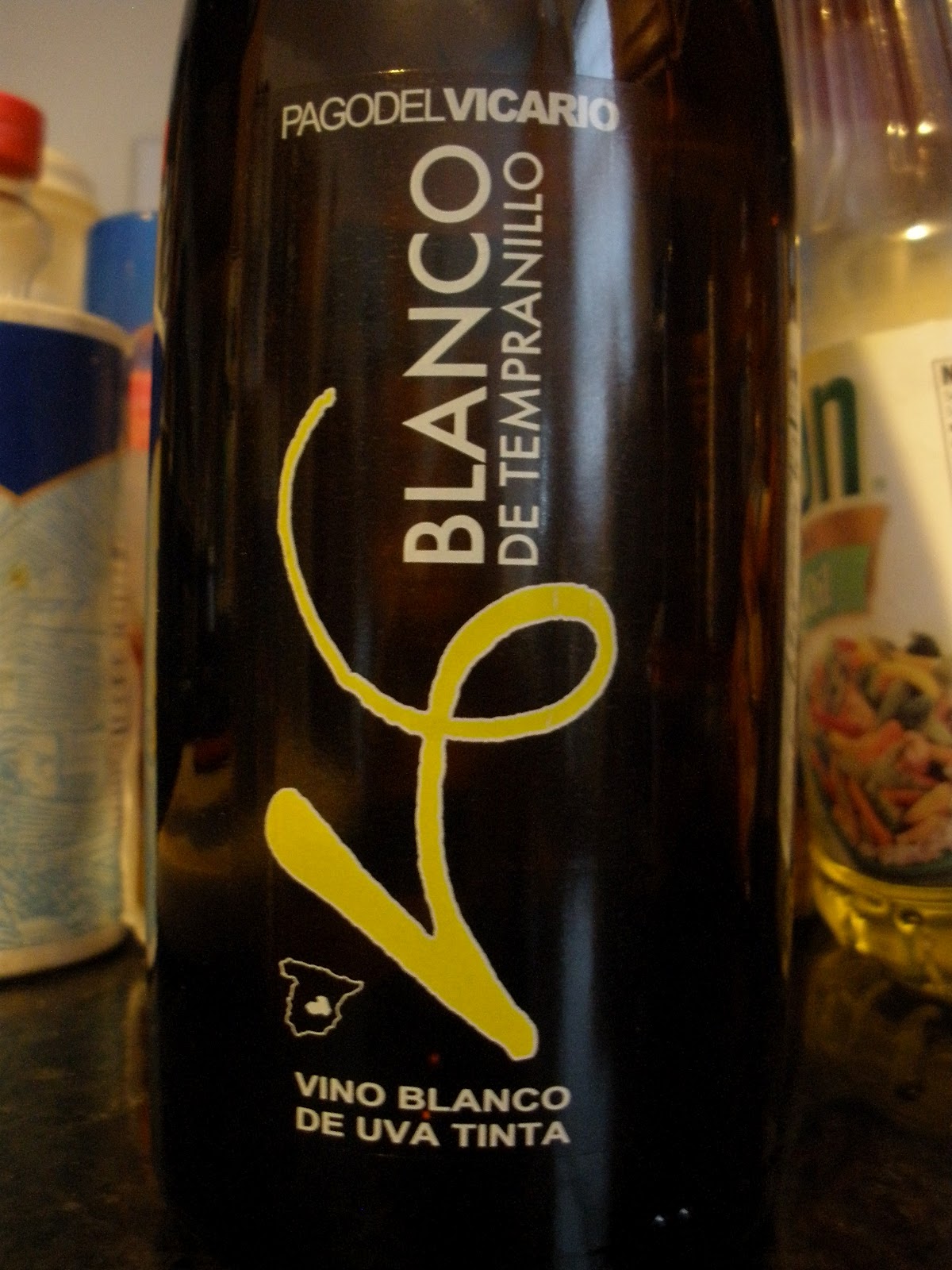
Hello friends and neighbors, and welcome to the third installment of Free Wine Friday, where I write about interesting wines I've received as samples. Today we'll be taking a look at two Spanish wines made from Tempranillo and Petit Verdot grapes. While Tempranillo is obviously anything but a Fringe Wine grape, the wine we'll be looking at below is made in a very unique style. Before we get there, though, I'd like to say a few words about how I got my hands on these wines.
A few months back, I was visiting
Terra Vino, which is a really cool wine shop run by my friend Chris over in Brookline, MA. While I was there, a distributor happened to drop by to pour some samples for Chris and he invited me over to taste a few of these wines with him. Most of the wines that the distributor was pouring were these really interesting biodynamic California wines from an estate called Ambyth (whose Marsanne I'll be writing about next week). I enjoyed these wines quite a bit but hadn't heard of them before or seen them anywhere else in Massachusetts, so I pressed the saleswoman for more information about which distribution company she worked for. It turned out that she had just started her own distribution firm after working on the retail end of the wine trade for many years and was in the very early stages of getting her company up and running.
The woman's named was Monica Jenkins and her company is called
MBJ Wine Group. They're a fairly small operation now, but Monica is looking to bring some new and interesting wines into the state of Massachusetts, which is a goal I can certainly get behind. We spoke for a while at Terra Vino and it turned out that Monica was looking for some editorial help with her blog and website, which I have been happy to provide. I do receive compensation from MBJ for my services, so there is a financial relationship in place, but in the confines of my own site, I always try to stay as objective as I can about the wines that I try, no matter where they come from or under what circumstances.
I visited Monica's warehouse a few weeks ago because she had some interesting wines come in that she wanted me to try with her. A winery in Spain called
Pagodel Vicario, located in the Castilla-La Mancha region, had sent her several sample bottles for their entire line of wines, but two of them in particular stuck out to me (both were from the 2011 vintage). The first was called Blanco de Tempranillo and when Monica first told me about it, I got really excited. I have been trying to track down a wine made from Tempranillo Blanco, which is a white-berried mutation of the Tempranillo grape, for several months now, with no luck. I was hoping that I might finally be able to try a wine made from this grape, but as soon as I saw the label, I knew it was not to be. The label says "Vino blanco de uva tinta," which means something like "white wine made from red grapes." Rather than the white-berried mutation, this was more like a blanc de noir, where the red-berried grapes are pressed lightly with as little skin contact as possible in order to collect only the white juice for fermentation, which is the same processed used to make this
Blanc de Franc wine previously featured on this site.
Despite my initial disappointment, I was still eager to try this wine since I'd never seen Tempranillo vinified this way before. The winery's website says that they picked the grapes for this wine on August 11, which is incredibly early, in order to retain freshness and acidity. The wine is vinified and aged in temperature controlled stainless steel prior to bottling. In the glass the wine was a silvery color with a slight pinkish tinge. It's hard to tell from the winery's
site whether the grapes were crushed then pressed or just pressed whole, but whichever the case there was just a bit of pigmentation that found its way into this wine. On the nose the wine was fairly intense with apple, strawberry and cherry fruit aromas. If I was smelling this blindfolded, I probably would have guessed that it was a rosé wine rather than a white. On the palate the wine was on the fuller side of medium with medium acidity. There were flavors of creamy ripe pear, strawberry and tart cherries. Everything about this was screaming rosé to me except for the color of the wine in the glass. This is a really cool wine with some pretty unique characteristics, even if it isn't necessarily all that complex. I'm not sure what the retail price for something like this is, but if you're interested, feel free to email Monica at info@mbjwine.com.

The second wine that I tried was a rosé wine made from Petit Verdot grapes. We've explored Spanish Petit Verdot around here before, so interested readers are advised to read
this post for more information about the grape itself. Every Petit Verdot based wine that I've ever tried has been inky black due to the grape's thick skins and small berry size, so I was very curious to see what a rosé wine made from 100% Petit Verdot would be like. The winery's website indicates that the juice was left in contact with the skins for only 8 hours in making this wine, but the result is one of the most intensely colored rosé wines that I've ever seen. In the glass this wine was a medium purple ruby color with a bright magenta rim. The intensity of the color was shocking as I know I've had red wines that weren't this deep (like wines made from
Schiava or even some Pinot Noir). The nose was intense with waxy cherry and raspberry fruit along with a touch of licorice and rose petal. On the palate the wine was on the fuller side of medium with fairly high acidity. There was a bit of tannic grip to the wine as well, despite the brief skin contact time. There were bright, electric flavors of red berry fruit and waxy candied cherries. It wasn't complex, but it was intense and powerful. This is the biggest, most insane rosé wine I've ever tasted. It clocks in at 15% abv and in all honesty should probably be considered a red wine for food-matching purposes. It is much friendlier and more approachable than a varietal red wine made from Petit Verdot grapes, as it doesn't have the tight, tough, intense tannins that those wines carry along for their first decade or so in bottle, but it is definitely not the kind of light, crisp, refreshing wine that most people are looking for when buying a rosé. Drinking this is definitely a unique experience, so if you're interested, feel free to email Monica at info@mbjwines.com for more information.