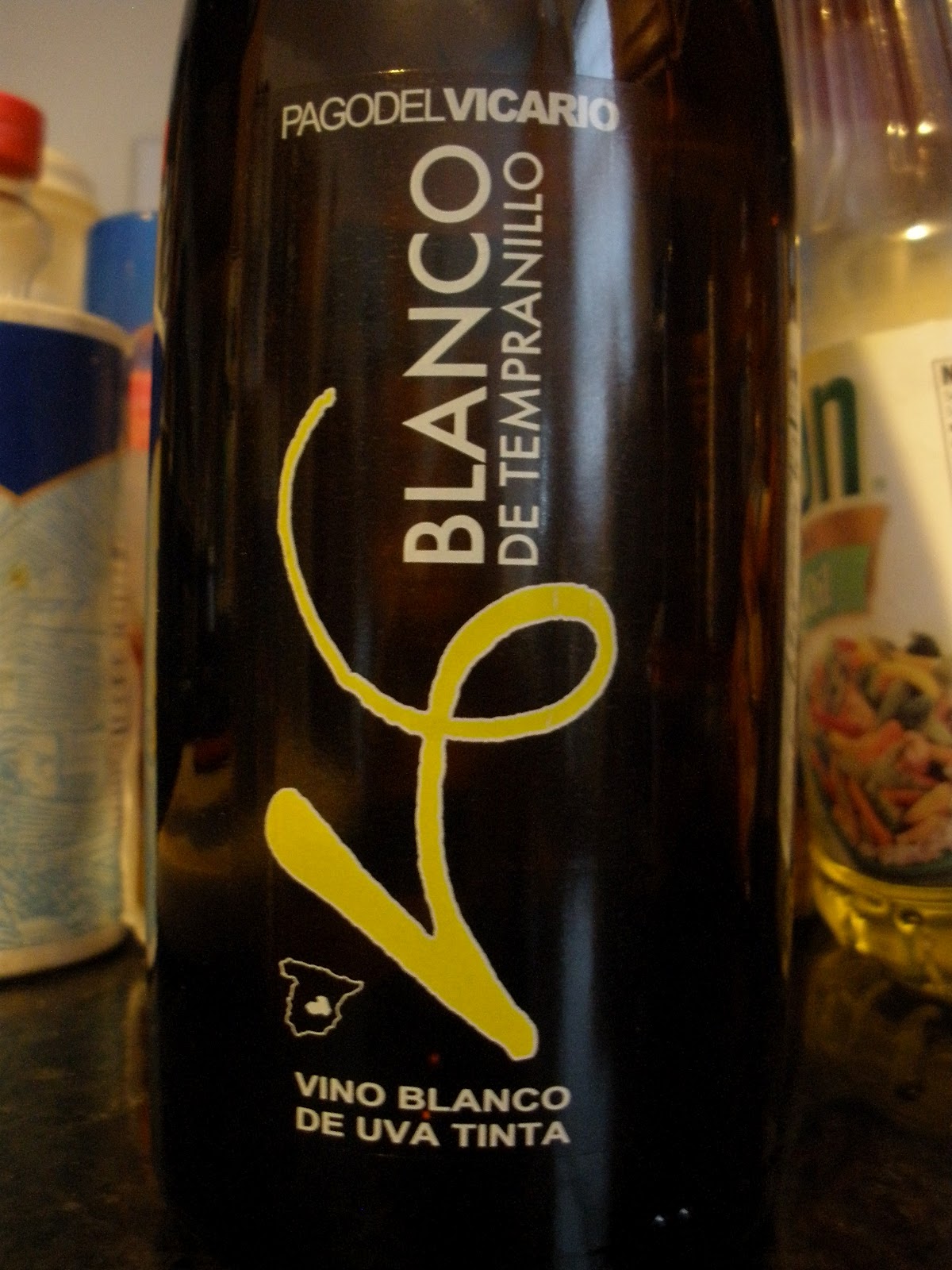
Welcome, friends and neighbors, to Fringe Wine's 150th post! To commemorate this special occasion I've decided to do something a little bit different. Today's post will cover a grape that is actually the most planted grape (in terms of area) on planet Earth. The name of that grape is Airén and it is planted on over 750,000 acres of land worldwide, though nearly all of it is located in central Spain. For comparison's sake, it is estimated that Chardonnay is planted on about 400,000 acres of land throughout the world while Cabernet Sauvignon is planted on an estimated 435,000 acres. Yet if you walk into your local wine store, chances are that you'll find dozens of bottles of Chardonnay or Cabernet Sauvignon, but you probably won't find a bottle of Airén. Why is that?
Part of the reason is that Airén is planted at extremely low densities throughout central Spain (and is grown virtually nowhere else in the world). While the grape does hold the title for most planted grape in terms of total area, it is thought that Chardonnay or Cabernet Sauvignon may be the most planted grape in the world in terms of total vines planted. The average planting density for Airén vines in La Mancha is about 500-600 vines per acre. By contrast, the planting densities in Bordeaux are around 3200 vines per acre on the low end and over 4000 vines per acre on the high end. The area where Airén is primarily grown is the La Mancha plateau in central Spain whose name comes from the Moorish word "Manxa" which means "parched earth." As you might expect, this area is very hot and very dry with summertime temperatures often in excess of 100 degrees Fahrenheit and yearly rainfall totals averaging about 16 inches per year. In these extreme conditions, spacing the vines far apart serves two functions. First, the space allows air to circulate freely around the vines which helps them cool off. The area is also prone to severe frosts in the winter and, paradoxically, the increased air circulation can minimize frost damage to the vines as well.
The main reason for the wide spacing, though, has to do with the low rainfall the area receives. High planting densities mean that there are a lot of plants and a lot of plants need a lot of water. Spacing the plantings out lessens the competition between vines and allows them to survive on the meager resources, especially water, that the parched environment can provide. Irrigation is technically illegal for vines in the EU, though the
Oxford Companion to Wine assures us that this restriction is "easy, if initially quite expensive, to flout." Given that wines produced from Airén grapes do not command any kind of premium, the costs associated with irrigation are probably not worth it for the growers, so the wide spacing is employed because, frankly, there aren't many other crops that could grow effectively and profitably in those conditions anyway.
Even if we factor in the low planting densities, though, Airén plantings are still about 1/5th of Cabernet Sauvignon plantings worldwide, which is a heck of a lot of vines. Airén is much more widely planted than Sangiovese, for example, but Sangiovese-based wines are far more common than Airén based wines. The answer to the riddle of Airén's lack of presence on the international wine scene is pretty simple. The grapes make mostly uninteresting wines. This was much more true about 30-40 years ago when the wines made from Airén grapes were often sloppily made and usually oxidized. As temperature controlled fermentation vessels made their way into the area, the wine quality improved dramatically, though "neutral" and "crisp" seems to be the highest summit that wines from Airén grapes are capable of achieving.
Today most of the juice from Airén grapes is used either in bulk wine production or is shipped off and distilled into brandy, with only a small amount used for the production of quality table wines. Why devote so much land to such an unprofitable and uninteresting grape? In short, the climate is to blame again. Airén is the grape of choice in this region because of its ability to survive and thrive in the hot, dry conditions of La Mancha. Its drought resistance in particular has endeared it to the growers here for many centuries, with the earliest recorded mention of Airén occurring in 1615. Its fortunes are beginning to turn, though, as many growers in central Spain are pulling up their Airén vines and replacing them with red grapes like Tempranillo. EU vine pull incentives seem to be accelerating this trend, though Airén has a long way to go before it is in any danger of disappearing completely.

I was able to try two very different wines made from the Airén grape. The first was the 2009 Casa del Aire from the Castilla region of Spain which I was able to find for about $9. This wine was sealed with a synthetic cork that had leaked a bit in my cellar, leaving a bit of mold on the lip of the bottle. I wiped the bottle clean and checked to see if the wine had oxidized, but it seemed to be mostly OK. In the glass the wine was a fairly light lemon gold color. The nose was moderately aromatic with green apple, pear and lemony citrus fruits. On the palate the wine was on the lighter side of medium with medium acidity. There were flavors of lemon peel and lemons with pear and a bit of green apple. It was quite bitter and bland. It is possible that it suffered somewhat as a result of the cork failure, but I've had other wines made from this grape and, in general, there isn't much to them. This wine was pretty typical in that the best you can really hope for is a crisp, clean white wine that won't run you more than about $10 retail. Given the wide variety of very good value wines on the market today, it's hard to recommend this wine unless you're just really looking for something you've never tried before.

The second wine that I tried was much more unusual. It was an orange wine from Vinos Ambiz that was limited in production to only 200 bottles. For those of you who don't know, orange wines are wines made from white grapes where the juice has been allowed to sit on the grape skins for some time after pressing. In the usual process for making white wines, the grapes are pressed and the juice is separated from the rest of the grape matter immediately. In red wine production, the juice is allowed to sit on the skins for awhile in order to pick up coloring and other flavor compounds from the skins. So, essentially, orange wines are white wines that are made using the process for red wines. Orange refers to the deeper color that many of these wines pick up as a result of their extended skin contact. For those who are still confused, I'd highly recommend reading this illustrated
blog post over at Hawk Wakawaka Wine Reviews. To the left is a picture of what this orange wine looked like in my glass. As you can see, not only is the color much deeper, but the wine is cloudy as well, which in this case is because the wine is unfined and unfiltered before being bottled.
I was able to pick this wine up from my friends over at the
Spirited Gourmet in Belmont for about $25. As you can see, I had bottle number 88 of 200. The back label tells us that the wine is made from grapes harvested from 30 year old vines. Further, there are no pesticides, fungicides or fertilizers used in the vineyard and absolutely nothing was added to the juice before, during or after fermentation. Natural yeasts from the vineyard were used for the fermentation itself. These guys are unabashedly in the "natural wine" camp, and you can read more about their philosophy on viticulture and winemaking at this blog
here.
In the glass, this wine was a cloudy pinkish-orange color that looked an awful lot like grapefruit juice. The nose was very aromatic with citrusy fresh-cut grapefruit and orange aromas. On the palate the wine was medium bodied with medium acidity. There was a kind of fruit cocktail thing going on in my glass with a bit of bitter orange peel and orange, pink grapefruit, apple, pear and white grape fruit flavors. Unfortunately, a lot of these flavors were masked by a chalky bitterness that was much too present for my tastes.
Here's the thing about a wine like this. If you took one look at the picture of the wine in my glass and read about their non-interventionist approach and you felt yourself starting to drool and get excited, then you'll probably really like this wine. If you've never heard of "natural wine" or "orange wine" and are still trying to figure out why you can't see through the liquid in the picture above, then you might want to give this wine a wide berth. Is it a good wine? In its way, yes, it is good. It's interesting and thought provoking in a lot of different ways. Is it for everyone? Absolutely not. If you prefer your wine crystal clear and squeaky clean, the first bottle I wrote about is definitely more your speed. For the rest of you, there is now, at most, 199 bottles of this wine left. Good luck tracking it down.
Bonus trivia: In Japanese, the word "airen" means "soulmate." It also means "lover" in Chinese.