Pineau d'Aunis is a grape whose many names can give the illusion of familiarity. Its most common name, Pineau d'Aunis, puts one in mind of the Pinot family of grapes, which it is related to only linguistically, as there is no genetic relationship between the Pinot family and Pineau d'Aunis that I am aware of. Both Pinot and Pineau come from the French word for "pine" because the bunches of grapes supposedly looked like pine cones to those who were naming them (think of Pignolo or Pignoletto in Italy). The d'Aunis part of the grape's name comes from the Prieure d'Aunis, a monastery located near the Saumur region of the Loire Valley. It is thought that the grape was first "discovered," or, more accurately, selected for by the monks there.
Many local growers throughout the Loire Valley also refer to the grape as Chenin Noir, suggesting some kind of relationship to the Chenin Blanc grape that has made so many areas of the Loire Valley famous. Confusingly enough, one of the alternate names for Chenin Blanc is Pineau de la Loire, which certainly might make one wonder about the relationship between the two grapes. Wikipedia has it that Chenin Blanc is a mutation of Pineau d'Aunis, but if you follow the source cited for that bit of information, you can see that there is no such claim made in the original material and, further, that the source material makes no reference to the Pineau d'Aunis grape at all. The common consensus seems to be that Chenin Blanc and Pineau d'Aunis are, in fact, completely unrelated, and the Chenin name common to the two of them comes from a site known as Mont Chenin in the Loire Valley where the Chenin Blanc grape was planted by the Lord of Chenonceaux in the 15th Century. The Chenin name most likely got moved over to the Pineau d'Aunis grape at a time when its plantings were as significant as those of Chenin Blanc in some areas of the Loire Valley and many farmers began to refer to the grapes as Chenin Blanc and Chenin Noir for convenience's sake.
DNA analysis would clear the whole matter up, but it would seem that no one has bothered to give it a try. Which is too bad, really, because the grape is old enough and has been in the region for long enough that there may be some interesting discoveries to be had. It's said that Henry III of England was a fan of the wine and had it imported in from France in the mid 13th Century. Apparently the English ruled over Anjou, located in the Loire Valley, for a few decades before Henry III came into power and Henry tried, in vain, to bring the region back under English rule throughout his reign. I doubt that Pineau d'Aunis wine had too much to do with Henry's motivations, given the extraordinarily complex web of political intrigue throughout Western Europe at the time, but it certainly could have played some role. Wars have been waged for far less important reasons than a barrel or two of wine.
Today, it would be a wild exaggeration to call Pineau d'Aunis a "wine for Kings." I'm not entirely sure what the reason for the grape's ultimate decline was, but my guess is that the white wines of the Loire Valley began to gain in popularity and profitability at some point and many growers pulled up their red grapes in favor of the twin darlings of the Loire Valley, Sauvignon Blanc and Chenin Blanc. As of the year 2000, there were fewer than 1000 acres (about 430 hectares) planted to Pineau d'Aunis, most of which ends up as an anonymous minority component in some Loire Valley red or rosé wine. You're most likely to find it as a varietal wine in the Coteaux du Vendômois, which is around the center of the Loire Valley (from east to west), just north of Vouvray. Most wine made under this appellation is rosé, and I was able to find two examples in this particular style. There are also a handful of producers who make red wines that are all or nearly all from the Pineau d'Aunis grape, and I was able to try one of those bottlings as well. Finally, there are some people who are just doing crazy things with the grape, and from one of those producers I was able to find a fully sparkling white wine made from Pineau d'Aunis grapes.
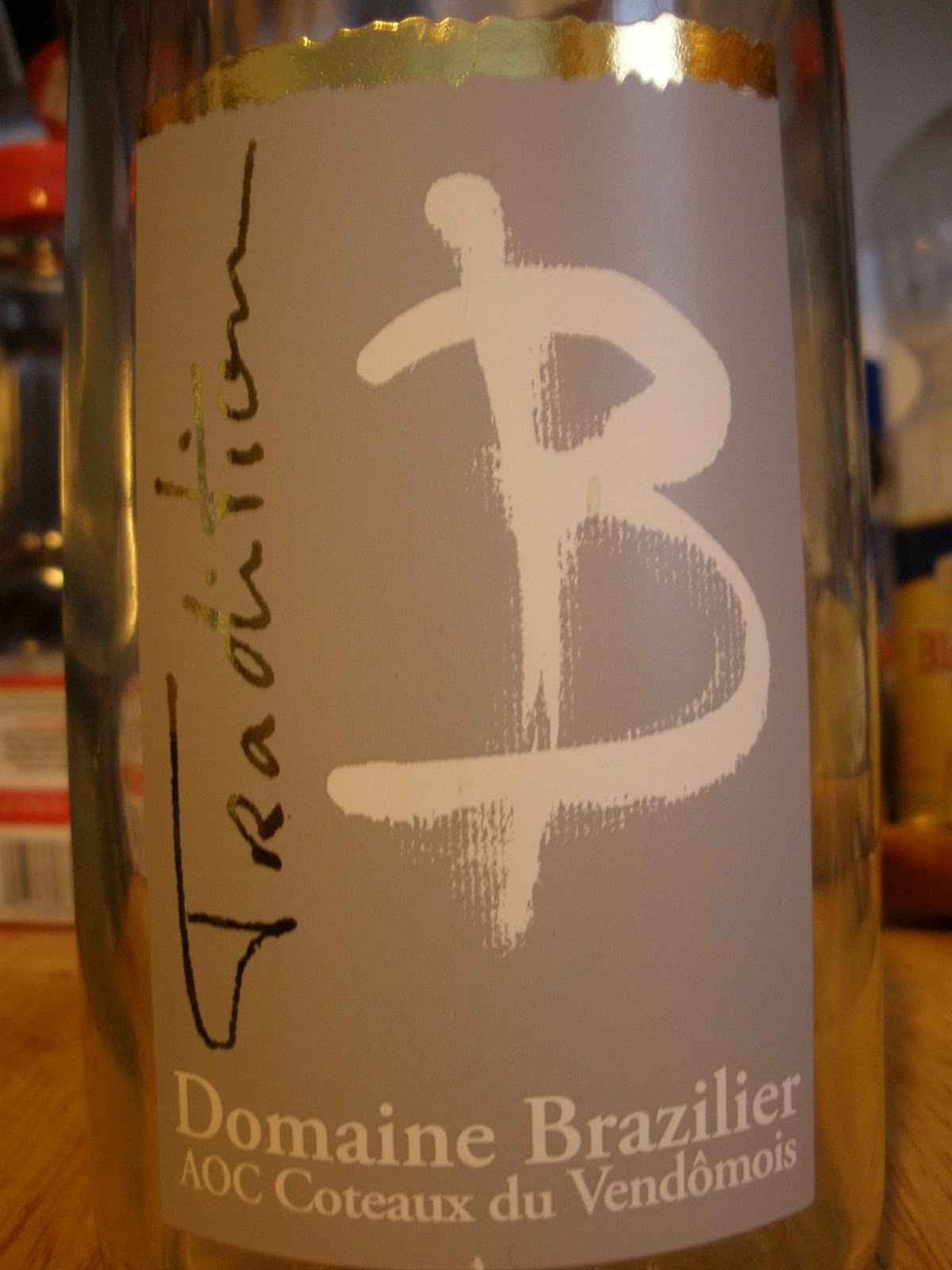
The first bottle that I was able to find was the Domaine Brazilier Pineau d'Aunis rosé from the Coteaux du Vendômois AOC which I picked up for about $17. If my bottle had a vintage, I wasn't able to locate it. In the glass, the wine was a very pale salmon pink color. The nose was moderately aromatic with aromas of fresh cut watermelon and strawberry fruit. On the palate, the wine was on the lighter side of medium with medium acidity. There were light, delicate flavors of strawberry, raspberry and watermelon fruit with a touch of herbaceousness to it. Given the price tag on this wine, I was a little disappointed in how straightforward and simple the aroma and flavor profiles were. I don't generally buy rosé wines with the expectation that they are going to be much more than fruity and refreshing, but once I pass a certain price threshold, I do begin to expect a little more out of a wine. At nearly $20 per bottle, I feel that this probably should have been more complex and interesting than it was. It's entirely possible that this wine was past its prime, but without a vintage date, it's hard to say. Since there are other examples of this grape in this style for much less money, I'd advise caution with this particular bottling at this price point.
The second rosé that I was able to try was the Cave Cooperative du Vendômois bottling from the Coteaux du Vendômois AOC which I picked up for about $10. As you can see on the label, the wine is labeled as "Lieu-dit Cocagne," which I believe means that the grapes came from a specific parcel of land referred to as Cocagne, though I don't have any idea what or where that is. The wine is made by a cooperative comprised of 25 growers and about a dozen different winemakers who, together, farm about 160 hectares of land, about 50 of which are devoted to the Pineau d'Aunis grape. In the glass, the wine was a pale pink color. The nose was very aromatic, dominated by pink grapefruit and fresh strawberry fruits. On the palate, the wine was medium bodied with high acidity. There were flavors of watermelon, pink grapefruit and grapefruit peel with a touch of grassy herbaceousness that put me in mind of Sauvignon Blanc. The wine had the kind of wonderfully clean, minerally finish to it that makes you keep reaching for the glass.. This wine was beautifully perfumed with deep, pure fruit flavors and an electric nerve of acid that kept it bright and refreshing. THIS is the kind of rosé that I love to drink and at only $10 a bottle, it's really an incredible value.
The next wine that I tried was the 2010 Olivier Lemasson "Poivre et Sel" bottling from Touraine in the Loire Valley. I picked this bottle up from my friends at the Wine Bottega for about $20. I've read online that this wine is 50/50 Pineau d'Aunis and Gamay, but the bottle says"Pineau d'Aunis...un peu de Gamay," which my high school French tells me means there's just a little bit of Gamay in it (the importer website says it is 90/10, which is probably the more accurate figure). The Poivre and Sel ("pepper and salt") is a reference to the fact that many people find a peppery aroma and flavor in the Pineau d'Aunis grape which the winemaker believes is perfectly complemented by a little Gamay as the salt to Pineau's pepper. In the glass, this wine was a fairly light purple-ruby color. The nose was moderately aromatic with plummy, cherryish fruits and a bit of that natural wine funk. On the palate the wine was medium bodied with fairly high acidity and medium tannins. There were flavors of juicy, tart red cherry and red berry fruit and, yes, a hint of pepper. There was also a touch of tart cranberry and horsey funk on the finish. This wine had a nice balance of bright and juicy fruit with just enough earthy funk to keep it interesting. I found it somewhat similar to the Grolleau that I wrote about a few months back. Is it worth $20 a bottle? If you're looking for an upscale alternative to Beaujolais or are looking for a conversation piece to have at a dinner with friends, then yes, I think the price is fair.
I've saved the most interesting bottle for last. The final Pineau d'Aunis that I tried was the NV Jean-Pierre Robinot "Les Annes Folle" sparkling Pineau d'Aunis that I picked up from the Wine Bottega for about $30. Robinot has two lines of wine that he makes: the "Domaine de L'Ange Vin," which are made from his own grapes, and the "L'Opéra des Vins" which are made from grapes he buys from other local growers. This bottle is in the latter category. The wine about 80% Pineau d'Aunis and 20% Chenin Blanc. In the glass, the wine was a bronze-gold, almost russet kind of color that was very fizzy and slightly cloudy (the method used here is méthode ancestrale, like in our old friend Mauzac). The nose was fairly reserved with some green and baked apple aromas with a bready, yeasty kind of undercurrent. On the palate, the wine was medium bodied with high acid and a lot of bubbles. I was expecting this to be closer to frizzante, but the bubbles were pretty serious and vigorous. The flavor profile was yeasty and bready with some tart apple fruit that was almost a little cidery and just a touch of pastry dough. The secondary flavors and aromas were much more noticeable than the fruits here, so if you're looking for something like Prosecco or Moscato d'Asti, keep looking. I'm conflicted about this wine because on the one hand, it's a really cool and interesting wine, but on the other, it's hard to say if it's tasty enough to really warrant the $30 price tag. I personally enjoyed it, but it's not going to be for everyone. I would guess if you've read this far, you probably already know whether this is something you'd be really into or really afraid of, so I guess you should just follow your gut.
A blog devoted to exploring wines made from unusual grape varieties and/or grown in unfamiliar regions all over the world. All wines are purchased by me from shops in the Boston metro area or directly from wineries that I have visited. If a reviewed bottle is a free sample, that fact is acknowledged prior to the bottle's review. I do not receive any compensation from any of the wineries, wine shops or companies that I mention on the blog.
Monday, January 30, 2012
Thursday, January 26, 2012
Nerello Mascalese - Sicily, Italy
If Nerello Mascalese was a person, it would have a serious little-brother complex. It's never been considered the greatest grape in Sicily and has been greatly overshadowed for many many years by the Nero d'Avola grape. Nero d'Avola was itself little known outside of Sicily until not that long ago, but now it is hands down the most well-known and well-regarded Sicilian grape, especially among the red varieties.
It's difficult to talk about Nerello's recent presence in our lives and on our shelves without talking a little about the Nero d'Avola effect. For a long, long time, Sicily was not regarded as a place for fine wine production by most of the world. They grow a ton of grapes all over Sicily, but the overwhelming majority of the juice from those grapes ends up in bulk wine production or at the distillery. Of course there were people on the island who were interested in making fine wines and who, for the most part, were succeeding in that task, but they were small voices in a loud crowd, so to speak, and the reputation of Siclian wines overall was still not that great in spite of their successes. They could have tried to do what a number of different regions have done and decide to try their hand with the International grape varieties, which do grow well and flourish in the Sicilian climate, but if they had gone that route and tried to compete with the great wine regions of the world, I suspect they probably wouldn't have succeeded. Cabernet from a region known for cheap wines is still just cheap Cabernet and that identification with mass-produced, cheap wines is a difficult barrier to pass.
What they really needed was something that would separate and differentiate them from the other wine regions of the world. They found that something in the Nero d'Avola grape. The story is similar to the phenomenon of Australian Shiraz or Argentine Malbec. The Aussies didn't have an original product, but they had a different name for it that made it stand out from the other bottles on the shelf. Argentina wasn't the only place making wines from the Malbec grape, but they were the only ones doing it in quantities that would make the wines easily accessible to nearly every consumer. The trick was finding a little niche in the market that wasn't adequately filled by some other region and making the case that what you were filling that niche with was not only exciting and interesting, but was really only available from you, which is of course not true with Syrah or Malbec, but the marketing machines convinced a lot of people that it was. The great thing about Nero d'Avola for the Sicilians was that they didn't even really have to spin it. Nero d'Avola is only grown in Sicily and is only available from Sicilian winemakers. They had a real, original wine to offer.
These wines were new and interesting, but they were also well made and tasty. Consumers flocked to these wines because they were something different, but they stuck around because the wines were actually pretty good. Even though the overwhelming majority of wine made in Sicily is still bulk (only 5% ultimately ends up in bottle and only 2% of that is DOC classified), those winemakers who were interested in reaching a different demographic had finally found their in-road with the Nero d'Avola grapes. Consumers were now willing to buy and drink not only wines made from Nero d'Avola, but also wines from Sicily in general. The tide rose and raised a lot of ships, which, finally, brings us to our featured grape, Nerello Mascalese. Nerello and many of the other interesting Sicilian grapes are traveling the path blazed by the success of the Nero d'Avola grape.
There are actually two different Nerellos. Mascalese is the more common of the two and is named for the plain of Mascali at the base of Mt. Etna, the Sicilian volcano that has really been the epicenter for quality wine production within Sicily. The other Nerello is called Cappuccio, though I'm not sure why. The two are almost always blended together since they tend to have complimentary characteristics. One is lighter in color but higher in tannins while the other has deep color but low tannins. I'm not sure which contributes which, and there is no real consensus about which of the two grapes is considered superior. The important thing to remember is that they usually travel together and when they do, you're much more likely to see a higher proportion of Mascalese in the blend than Cappuccio.
The grape has been grown around Mt. Etna for at least 200 years. It does well on the volcanic soils and can be especially nice when grown on higher altitude sites on the volcano. Despite the fairly long established history and the lack of similar grapes in any other region, Nerello is probably not native to Sicily. A study done in 2008 (source) found that Nerello Mascalese is almost certainly the offspring of the Sangiovese grape and some other unidentified parent, meaning that it probably came over from the Italian mainland at some point. This puts Nerello in some interesting company, as the same study also found that Frappato and Gaglioppo, among others, had the same kind of relationship to Sangiovese, meaning that all of those grapes are at least half brothers with one another.
I was able to find a handful of different bottles of Nerello representing several different styles and philosophies. The first wine that I tried was a NV Casa Fondata Valdo that I picked up at Bauer Wine and Spirits for about $13. This is actually made in the Prosecco region of Italy from Prosecco grapes (also known as Glera) and Nerello grapes or juice that they bring up from Sicily. There's minimal skin contact with the Nerello grapes, so there's very little color, and the wine made in the Charmat method, as is most Prosecco, so it's much fruitier than your typical Champagne method sparkler. In the glass the wine was a pale salmon pink color that was nice and fizzy. The nose was fairly aromatic with bright, fruity strawberry and green apple aromas. On the palate, the wine was on the lighter side of medium with medium acidity and nice bubbles. There were flavors of strawberry and raspberry candy with snappy green apple backing it up. This is all fruit and is as simple as it can be, but it's nice and tasty and is something that's definitely a little bit different. I'm sure Prosecco has some great food matches, but I always just like to drink it on its own and have a little fun with it. For $13, it's really hard to go wrong.
The next wine that I picked up was the 2008 Nicosia Nerello Mascalese that I grabbed from my friends at Bin Ends for about $10. It's more representative of the kind of everyday table wine you may find at your local wine shop. In the glass, the wine was a fairly light ruby color. The nose was nicely aromatic with red cherry and smoke aromas along with some stewed red berries. On the palate, the wine was medium bodied with fairly high acid and low tannins. There were flavors of sour cherry and redcurrant fruit along with some dried herbs and chocolate on the finish. As the wine opens up, the fruit flavors move away from the red end of the spectrum towards the black with more black cherry, black plum, smoke, chocolate and baking spice showing up. It's a good, solid, Italian food wine that would be great with anything with a tomato sauce or with some braised red meats. At $10 a bottle, it's a good, solid value wine that isn't going to blow you away, but is going to be well-made, well-structured and well-suited to a variety of different kinds of food.
The final wine that I'll be talking about is probably the most interesting and the most divisive. A few weeks ago, my friends over at the Wine Bottega put on a tasting of the wines from Frank Cornelissan, the Madman of Etna. The Cornelissan estate is really serious about the concept minimal intervention in the vineyard and in the winery and they take it about as far as it can go. The wines made by Frank Cornelissan come as close as wine can come to that line that separates wine as a beverage from vinegar as a condiment. They go into their philosophy in some detail on the website linked above and I encourage you to read what they have to say.
The estate makes three different red wines ranging in price from about $27 to about $150. Each wine at each price point is made from grapes harvested at a certain altitude on the slopes of Mt. Etna with the most expensive wines made from grapes grown at the highest elevations. The guys at the Bottega were nice enough to let us sample all of the different cuvees and even opened a few bottles from previous vintages that they had been squirelling away. I ended up buying a bottle of the Contadino 8, which is the bottom of the line cuvee, for about $27. There is no vintage on the wine and the number is an indication of how many times he's made that particular cuvee before. This is the 8th incarnation of the Contadino blend, which is mostly Nerello Mascalese, but it would be something of a fool's errand to try and figure out exactly which grapes are in this bottle. The wine is unsulfured and unfiltered so I had to store it in the fridge upright until I was ready to drink it, at which point I took it out and let it come to room temperature over 24 hours. I then very carefully decanted the wine twice to leave as much sediment behind as possible (when I did get some sediment, it was fairly bitter, so avoid it if you can). In the glass, the wine is a light ruby red color that is more serious than a rosé but less dark than you'd expect from a red wine. The nose was nicely aromatic with bright red cherry and candied cherry fruits and damp, forest floor kind of aroma. In the glass, the wine was on the fuller side of medium with fairly high acidity. There were flavors of red cherry, wild raspberry, wild strawberry, black tea and damp leaves. The wine develops with incredible speed as it sits in the decanter in the glass and the bright red flavors get darker and duskier. It reminded me a lot of some of the Trousseau from the Jura that I had or even of really funky Burgundy. It's a wild, savage wine that is really unlike anything I've ever had before. It's hard to recommend it unequivocally to people, as it is certainly not going to be everyone's kind of thing, but if you're looking for a weird, wild, different kind of wine adventure, give something in the Cornelissan line a shot.
It's difficult to talk about Nerello's recent presence in our lives and on our shelves without talking a little about the Nero d'Avola effect. For a long, long time, Sicily was not regarded as a place for fine wine production by most of the world. They grow a ton of grapes all over Sicily, but the overwhelming majority of the juice from those grapes ends up in bulk wine production or at the distillery. Of course there were people on the island who were interested in making fine wines and who, for the most part, were succeeding in that task, but they were small voices in a loud crowd, so to speak, and the reputation of Siclian wines overall was still not that great in spite of their successes. They could have tried to do what a number of different regions have done and decide to try their hand with the International grape varieties, which do grow well and flourish in the Sicilian climate, but if they had gone that route and tried to compete with the great wine regions of the world, I suspect they probably wouldn't have succeeded. Cabernet from a region known for cheap wines is still just cheap Cabernet and that identification with mass-produced, cheap wines is a difficult barrier to pass.
What they really needed was something that would separate and differentiate them from the other wine regions of the world. They found that something in the Nero d'Avola grape. The story is similar to the phenomenon of Australian Shiraz or Argentine Malbec. The Aussies didn't have an original product, but they had a different name for it that made it stand out from the other bottles on the shelf. Argentina wasn't the only place making wines from the Malbec grape, but they were the only ones doing it in quantities that would make the wines easily accessible to nearly every consumer. The trick was finding a little niche in the market that wasn't adequately filled by some other region and making the case that what you were filling that niche with was not only exciting and interesting, but was really only available from you, which is of course not true with Syrah or Malbec, but the marketing machines convinced a lot of people that it was. The great thing about Nero d'Avola for the Sicilians was that they didn't even really have to spin it. Nero d'Avola is only grown in Sicily and is only available from Sicilian winemakers. They had a real, original wine to offer.
These wines were new and interesting, but they were also well made and tasty. Consumers flocked to these wines because they were something different, but they stuck around because the wines were actually pretty good. Even though the overwhelming majority of wine made in Sicily is still bulk (only 5% ultimately ends up in bottle and only 2% of that is DOC classified), those winemakers who were interested in reaching a different demographic had finally found their in-road with the Nero d'Avola grapes. Consumers were now willing to buy and drink not only wines made from Nero d'Avola, but also wines from Sicily in general. The tide rose and raised a lot of ships, which, finally, brings us to our featured grape, Nerello Mascalese. Nerello and many of the other interesting Sicilian grapes are traveling the path blazed by the success of the Nero d'Avola grape.
There are actually two different Nerellos. Mascalese is the more common of the two and is named for the plain of Mascali at the base of Mt. Etna, the Sicilian volcano that has really been the epicenter for quality wine production within Sicily. The other Nerello is called Cappuccio, though I'm not sure why. The two are almost always blended together since they tend to have complimentary characteristics. One is lighter in color but higher in tannins while the other has deep color but low tannins. I'm not sure which contributes which, and there is no real consensus about which of the two grapes is considered superior. The important thing to remember is that they usually travel together and when they do, you're much more likely to see a higher proportion of Mascalese in the blend than Cappuccio.
The grape has been grown around Mt. Etna for at least 200 years. It does well on the volcanic soils and can be especially nice when grown on higher altitude sites on the volcano. Despite the fairly long established history and the lack of similar grapes in any other region, Nerello is probably not native to Sicily. A study done in 2008 (source) found that Nerello Mascalese is almost certainly the offspring of the Sangiovese grape and some other unidentified parent, meaning that it probably came over from the Italian mainland at some point. This puts Nerello in some interesting company, as the same study also found that Frappato and Gaglioppo, among others, had the same kind of relationship to Sangiovese, meaning that all of those grapes are at least half brothers with one another.
I was able to find a handful of different bottles of Nerello representing several different styles and philosophies. The first wine that I tried was a NV Casa Fondata Valdo that I picked up at Bauer Wine and Spirits for about $13. This is actually made in the Prosecco region of Italy from Prosecco grapes (also known as Glera) and Nerello grapes or juice that they bring up from Sicily. There's minimal skin contact with the Nerello grapes, so there's very little color, and the wine made in the Charmat method, as is most Prosecco, so it's much fruitier than your typical Champagne method sparkler. In the glass the wine was a pale salmon pink color that was nice and fizzy. The nose was fairly aromatic with bright, fruity strawberry and green apple aromas. On the palate, the wine was on the lighter side of medium with medium acidity and nice bubbles. There were flavors of strawberry and raspberry candy with snappy green apple backing it up. This is all fruit and is as simple as it can be, but it's nice and tasty and is something that's definitely a little bit different. I'm sure Prosecco has some great food matches, but I always just like to drink it on its own and have a little fun with it. For $13, it's really hard to go wrong.
The next wine that I picked up was the 2008 Nicosia Nerello Mascalese that I grabbed from my friends at Bin Ends for about $10. It's more representative of the kind of everyday table wine you may find at your local wine shop. In the glass, the wine was a fairly light ruby color. The nose was nicely aromatic with red cherry and smoke aromas along with some stewed red berries. On the palate, the wine was medium bodied with fairly high acid and low tannins. There were flavors of sour cherry and redcurrant fruit along with some dried herbs and chocolate on the finish. As the wine opens up, the fruit flavors move away from the red end of the spectrum towards the black with more black cherry, black plum, smoke, chocolate and baking spice showing up. It's a good, solid, Italian food wine that would be great with anything with a tomato sauce or with some braised red meats. At $10 a bottle, it's a good, solid value wine that isn't going to blow you away, but is going to be well-made, well-structured and well-suited to a variety of different kinds of food.
The final wine that I'll be talking about is probably the most interesting and the most divisive. A few weeks ago, my friends over at the Wine Bottega put on a tasting of the wines from Frank Cornelissan, the Madman of Etna. The Cornelissan estate is really serious about the concept minimal intervention in the vineyard and in the winery and they take it about as far as it can go. The wines made by Frank Cornelissan come as close as wine can come to that line that separates wine as a beverage from vinegar as a condiment. They go into their philosophy in some detail on the website linked above and I encourage you to read what they have to say.
The estate makes three different red wines ranging in price from about $27 to about $150. Each wine at each price point is made from grapes harvested at a certain altitude on the slopes of Mt. Etna with the most expensive wines made from grapes grown at the highest elevations. The guys at the Bottega were nice enough to let us sample all of the different cuvees and even opened a few bottles from previous vintages that they had been squirelling away. I ended up buying a bottle of the Contadino 8, which is the bottom of the line cuvee, for about $27. There is no vintage on the wine and the number is an indication of how many times he's made that particular cuvee before. This is the 8th incarnation of the Contadino blend, which is mostly Nerello Mascalese, but it would be something of a fool's errand to try and figure out exactly which grapes are in this bottle. The wine is unsulfured and unfiltered so I had to store it in the fridge upright until I was ready to drink it, at which point I took it out and let it come to room temperature over 24 hours. I then very carefully decanted the wine twice to leave as much sediment behind as possible (when I did get some sediment, it was fairly bitter, so avoid it if you can). In the glass, the wine is a light ruby red color that is more serious than a rosé but less dark than you'd expect from a red wine. The nose was nicely aromatic with bright red cherry and candied cherry fruits and damp, forest floor kind of aroma. In the glass, the wine was on the fuller side of medium with fairly high acidity. There were flavors of red cherry, wild raspberry, wild strawberry, black tea and damp leaves. The wine develops with incredible speed as it sits in the decanter in the glass and the bright red flavors get darker and duskier. It reminded me a lot of some of the Trousseau from the Jura that I had or even of really funky Burgundy. It's a wild, savage wine that is really unlike anything I've ever had before. It's hard to recommend it unequivocally to people, as it is certainly not going to be everyone's kind of thing, but if you're looking for a weird, wild, different kind of wine adventure, give something in the Cornelissan line a shot.
Tuesday, January 24, 2012
Schioppettino - Colli Orientali del Friuli, Italy
In many ways, the story of the Schioppettino grape is the story of a lot of the grapes that I've written about on this site. It's a grape that enjoyed a degree of popularity at some point in the distant past, and then, for one reason or another, was on the brink of extinction. It has enjoyed some limited success and a few new plantings in more recent years, but, on the whole, it's still little known outside of a handful of regions. While the outline of the story may seem familiar to longtime readers, it's always the details that make an individual story worth telling. After all, if we rejected out of hand all stories with similar structures and outlines, then writers would have had to give up their craft thousands of years ago and the modern entertainment industry would have had to fold up shop before it even got off the ground (though whether this would have been such a bad thing is something you can ponder at your leisure).
So what are the details of Schioppettino? For starters, it's a very old grape. There are written records that reference the grape as far back as 1282 AD when the wine was used in a Slovenian wedding ceremony. It's thought that the grape may be native to Slovenia, or at any rate to some area around the Italian-Slovenian border. One of its synonyms is Ribolla Nera, indicating that it may be a dark-skinned mutation of or at least a relative of the Friulian/Slovenian grape Ribolla Gialla, though I can't find any indication of just what the specific relationship between the two grapes may be. I would hazard a guess that since Schioppettino is the more common name, the relationship between it and Ribolla Gialla may be merely linguistic, but I would love to read about it if anyone has done the genetic research. There are a few different explanations for the use of the Schioppettino name. Some say that it comes from the Italian word scioppare, which means "to burst," while others say it comes from schioppettare which means "to crackle." In either case, the bursts or crackles are a reference to a version of the wine that is made locally and sold very young with some residual CO2 in it, leaving small, snappy bubbles behind that crackle on the tongue.
As mentioned above, Schioppettino was, at one time, in danger of disappearing completely. Like so many grapes throughout the world, Schioppettino was almost done in by the scourge of phylloxera that swept through Europe's vineyards in the mid 19th Century. Many grape growers who found their vineyards decimated saw the plague as an opportunity to start fresh, and when it came time to replant, they often opted for less finicky and higher yielding vines, but in the case of Schioppettino, fashion was the force that nearly drove it into extinction. Many of the growers in Friuli had their sights set on international markets rather than just local ones and so they replanted many of their vineyards to the classic French varieties of Cabernet Sauvignon, Merlot, and Sauvignon Blanc, among others. Plantings of the grape were so scarce after phylloxera that it was not included as an authorized variety in any of the DOC or EU regions until 1978, when the EU stepped in and issued a decree authorizing (or possibly just encouraging) the use of the grape in the Udine province of Friuli, which most sources credit as the act that saved the grape from oblivion. Plantings have risen over the past few decades to the point that the grape is no longer thought to be at risk for extinction, but certainly not to the point where it is widely available or well-known.
I was able to find a bottle of the 2008 Azienda Agricola Grillo (not to be confused with the Grillo grape) Schioppettino from the Colli Orientali del Friuli region of Italy at Central Bottle for about $23. In the glass the wine was a fairly deep purple-ruby color. The nose was nicely aromatic with rich black cherry and blackberry fruit backed by chocolate. It wasn't all that complex, but it was pure delight to smell. In the glass the wine was on the fuller side of medium with medium acidity and soft, silky tannins. There were flavors of rich black cherry, blackberry and blueberry fruit with nice earthy chocolate and vanilla undertones. The fruit here was pure, focused and right up front in the flavor profile but backed by excellent structure and a soft, smooth kind of earthiness. The flavor profile wasn't particularly varied or complex but the flavors were deep and powerful without coming across as jammy or sweet. For $23, I thought this wine was an excellent value and I wouldn't hesitate to buy not only this bottle again, but I also wouldn't hesitate to buy any wine made from this grape. I am very curious about the frizzante wines made from this grape and see that there are some bubbly Schioppettinos imported into the US so I'll definitely be keeping my eye out for any of those.
So what are the details of Schioppettino? For starters, it's a very old grape. There are written records that reference the grape as far back as 1282 AD when the wine was used in a Slovenian wedding ceremony. It's thought that the grape may be native to Slovenia, or at any rate to some area around the Italian-Slovenian border. One of its synonyms is Ribolla Nera, indicating that it may be a dark-skinned mutation of or at least a relative of the Friulian/Slovenian grape Ribolla Gialla, though I can't find any indication of just what the specific relationship between the two grapes may be. I would hazard a guess that since Schioppettino is the more common name, the relationship between it and Ribolla Gialla may be merely linguistic, but I would love to read about it if anyone has done the genetic research. There are a few different explanations for the use of the Schioppettino name. Some say that it comes from the Italian word scioppare, which means "to burst," while others say it comes from schioppettare which means "to crackle." In either case, the bursts or crackles are a reference to a version of the wine that is made locally and sold very young with some residual CO2 in it, leaving small, snappy bubbles behind that crackle on the tongue.
As mentioned above, Schioppettino was, at one time, in danger of disappearing completely. Like so many grapes throughout the world, Schioppettino was almost done in by the scourge of phylloxera that swept through Europe's vineyards in the mid 19th Century. Many grape growers who found their vineyards decimated saw the plague as an opportunity to start fresh, and when it came time to replant, they often opted for less finicky and higher yielding vines, but in the case of Schioppettino, fashion was the force that nearly drove it into extinction. Many of the growers in Friuli had their sights set on international markets rather than just local ones and so they replanted many of their vineyards to the classic French varieties of Cabernet Sauvignon, Merlot, and Sauvignon Blanc, among others. Plantings of the grape were so scarce after phylloxera that it was not included as an authorized variety in any of the DOC or EU regions until 1978, when the EU stepped in and issued a decree authorizing (or possibly just encouraging) the use of the grape in the Udine province of Friuli, which most sources credit as the act that saved the grape from oblivion. Plantings have risen over the past few decades to the point that the grape is no longer thought to be at risk for extinction, but certainly not to the point where it is widely available or well-known.
I was able to find a bottle of the 2008 Azienda Agricola Grillo (not to be confused with the Grillo grape) Schioppettino from the Colli Orientali del Friuli region of Italy at Central Bottle for about $23. In the glass the wine was a fairly deep purple-ruby color. The nose was nicely aromatic with rich black cherry and blackberry fruit backed by chocolate. It wasn't all that complex, but it was pure delight to smell. In the glass the wine was on the fuller side of medium with medium acidity and soft, silky tannins. There were flavors of rich black cherry, blackberry and blueberry fruit with nice earthy chocolate and vanilla undertones. The fruit here was pure, focused and right up front in the flavor profile but backed by excellent structure and a soft, smooth kind of earthiness. The flavor profile wasn't particularly varied or complex but the flavors were deep and powerful without coming across as jammy or sweet. For $23, I thought this wine was an excellent value and I wouldn't hesitate to buy not only this bottle again, but I also wouldn't hesitate to buy any wine made from this grape. I am very curious about the frizzante wines made from this grape and see that there are some bubbly Schioppettinos imported into the US so I'll definitely be keeping my eye out for any of those.
Thursday, January 19, 2012
Blatterle - Alto Adige, Italy
I live for wines like the one I'll be writing about today. It's a wine made from a very unusual grape that is grown in a very small region of Italy and, essentially, vinified by pretty much only a single producer. We've taken a look at a few wines like this in the past. The Roscetto from Lazio and the Casetta from the Veneto are both similar in terms of their obscurity. While I love to find wines like these, it can be a real pain to try to write about them. When you pass a certain point of obscurity, doing the research for a blog post becomes a real struggle. For most of my posts, the real challenge is in sifting through all the information I have to try and find the most interesting parts that I can write about. With some grapes, though, the challenge becomes trying to find any information at all about them. The grapes mentioned above, as well as today's grape, Blatterle, are not mentioned in any books that I have (aside from a passing mention of Casetta in Bastianich and Lynch's Vino Italiano) and are not heavily referenced online either. My life gets a lot more difficult once I go diving past a certain level of obscurity and find myself in the murky waters of the virtually unknown.
I mention in the Casetta and Roscetto posts linked above that all of the information available about those particular grapes comes from the people who are selling you the bottle, which always makes me a little uneasy. With Blatterle, the person who is growing the grapes and making the wine doesn't really have much of an online presence, so we are denied even that much access. In this case, the source of most of the information is the importer of the wine, Louis/Dressner, whose founder Joe Dressner sadly passed away just a few months back. I feel a little better about using the importer (this one in particular) rather than the winery itself as the primary source partly because the importer has a good reputation within the wine community, but mostly because the content of their site, or at least the part dealing this grape, is very factually oriented, and if it's a sales pitch, it's one of the driest ones I've ever come across. That sounds like a dig, but it's actually a really good thing in my opinion. I'm a "just the facts" kind of person and am much more interested in winery sites that sound more like an encyclopedia than like a commercial.
Here is essentially what we know about Blatterle. It is an old variety that is thought to be native to the Isarco River Valley in the Alto Adige. The name Blatterle means "little leaf" in German (remember that the Alto Adige region is a weird kind of mixture of German and Italian cultures), which, I guess, means that this vine may have smaller than average leaves. They say that the grapes themselves are kind of oval-shaped and golden colored, but I don't see it in the pictures that I was able to find. It seems that historically the grape was used either for grape juice production or in the production of a lightish, everyday kind of wine.
The grape is grown pretty much exclusively by the Mayr-Nusserhof estate, which is located near (or possibly in) the city of Bolzano on the Isarco River. The family who owns the estate are named Mayr while there are conflicting reports about where the Nusserhof comes from. The importer says that it's a reference to some hazelnut trees (Nuss is the German word for nut) that used to surround the house but which were cut down as the city of Bolzano has impinged further and further on the Mayr family's spread, which is currently about 2.5 hectares of organically farmed land. A shop in North Carolina presents the alternate theory that one of the current owner's relatives, a man named Josef Meyr Nusser, had the street named after him because of his actions in World War II, where his opposition to the Nazi regime led him to become a conscientious objector when the Nazis were recruiting soldiers from his occupied town. As you might imagine, the Nazis weren't especially kind to opposition of any sort and Josef died in a concentration camp as a Catholic martyr. The second story is not only much better, but is actually more plausible, so that's the one I'm going to choose to believe.
I was able to pick up a bottle of the 2007 Nusserhof "Blaterle" from my friends at Curtis Liquors for about $23. You may notice that the name of the wine is "Blaterle" rather than Blatterle. Since the Blatterle grape is not approved for use in any DOC wine, the winery bottles this as a Vino da Tavola, which has the restriction that you cannot print a place name, grape name or vintage on the label of the wine. Just by dropping one of the T's in the middle of the word, the winery is able to dodge these restrictions (the vintage is hidden at the bottom of the label where it says L07, the last two numbers being the last two digits of the vintage year). In the glass the wine was a pale greenish lemon color. The nose was fairly reserved with some pear fruit and something slightly nutty. As the wine approached room temperature, there was something vaguely floral that started to show up, but never in any serious amount. On the palate the wine was medium bodied with medium to low acidity. The wine had a very minerally flavor profile with some lean pear fruit and lemon peel, but not a whole lot. This wine was probably on the wrong end of its life span and was suffering slightly for it. It's interesting to compare my tasting notes with Jakob's Bowl who did his tasting a little over a year after I did and with a bottle that was one vintage year newer. My bottle lacked the explosive floral notes that his had and mine had definitely picked up more pithy citrus in the bottle. I'm interested in trying a younger version and will keep my eyes peeled and fingers crossed.
I mention in the Casetta and Roscetto posts linked above that all of the information available about those particular grapes comes from the people who are selling you the bottle, which always makes me a little uneasy. With Blatterle, the person who is growing the grapes and making the wine doesn't really have much of an online presence, so we are denied even that much access. In this case, the source of most of the information is the importer of the wine, Louis/Dressner, whose founder Joe Dressner sadly passed away just a few months back. I feel a little better about using the importer (this one in particular) rather than the winery itself as the primary source partly because the importer has a good reputation within the wine community, but mostly because the content of their site, or at least the part dealing this grape, is very factually oriented, and if it's a sales pitch, it's one of the driest ones I've ever come across. That sounds like a dig, but it's actually a really good thing in my opinion. I'm a "just the facts" kind of person and am much more interested in winery sites that sound more like an encyclopedia than like a commercial.
Here is essentially what we know about Blatterle. It is an old variety that is thought to be native to the Isarco River Valley in the Alto Adige. The name Blatterle means "little leaf" in German (remember that the Alto Adige region is a weird kind of mixture of German and Italian cultures), which, I guess, means that this vine may have smaller than average leaves. They say that the grapes themselves are kind of oval-shaped and golden colored, but I don't see it in the pictures that I was able to find. It seems that historically the grape was used either for grape juice production or in the production of a lightish, everyday kind of wine.
The grape is grown pretty much exclusively by the Mayr-Nusserhof estate, which is located near (or possibly in) the city of Bolzano on the Isarco River. The family who owns the estate are named Mayr while there are conflicting reports about where the Nusserhof comes from. The importer says that it's a reference to some hazelnut trees (Nuss is the German word for nut) that used to surround the house but which were cut down as the city of Bolzano has impinged further and further on the Mayr family's spread, which is currently about 2.5 hectares of organically farmed land. A shop in North Carolina presents the alternate theory that one of the current owner's relatives, a man named Josef Meyr Nusser, had the street named after him because of his actions in World War II, where his opposition to the Nazi regime led him to become a conscientious objector when the Nazis were recruiting soldiers from his occupied town. As you might imagine, the Nazis weren't especially kind to opposition of any sort and Josef died in a concentration camp as a Catholic martyr. The second story is not only much better, but is actually more plausible, so that's the one I'm going to choose to believe.
I was able to pick up a bottle of the 2007 Nusserhof "Blaterle" from my friends at Curtis Liquors for about $23. You may notice that the name of the wine is "Blaterle" rather than Blatterle. Since the Blatterle grape is not approved for use in any DOC wine, the winery bottles this as a Vino da Tavola, which has the restriction that you cannot print a place name, grape name or vintage on the label of the wine. Just by dropping one of the T's in the middle of the word, the winery is able to dodge these restrictions (the vintage is hidden at the bottom of the label where it says L07, the last two numbers being the last two digits of the vintage year). In the glass the wine was a pale greenish lemon color. The nose was fairly reserved with some pear fruit and something slightly nutty. As the wine approached room temperature, there was something vaguely floral that started to show up, but never in any serious amount. On the palate the wine was medium bodied with medium to low acidity. The wine had a very minerally flavor profile with some lean pear fruit and lemon peel, but not a whole lot. This wine was probably on the wrong end of its life span and was suffering slightly for it. It's interesting to compare my tasting notes with Jakob's Bowl who did his tasting a little over a year after I did and with a bottle that was one vintage year newer. My bottle lacked the explosive floral notes that his had and mine had definitely picked up more pithy citrus in the bottle. I'm interested in trying a younger version and will keep my eyes peeled and fingers crossed.
Tuesday, January 17, 2012
Pigato - Riviera Ligure di Ponente, Ligura, Italy
Today marks Fringe Wine's first foray into the tiny region of Liguria in Italy. In fact, if I'm not mistaken, with today's post, Fringe Wine will have covered a wine from each of the individual regions within Italy. Liguria is the last to be covered not because they lack interesting wines, but because they make so little of them and export even fewer. Liguria is next-to-last in vineyard area and total volume of production within Italy, ahead only of the Valle d'Aosta. When you look at a map of Italy, it's pretty easy to see why. Liguria is a tiny region in northwestern Italy, right below Piemonte, that forms a narrow band that just wraps above the Ligurian Sea. The landscapes here are dramatic, as there are steep hillsides and mountains that begin sometimes right at the shoreline and stretch back into Piemonte. So what you have is an area that isn't that big to begin with that has very difficult ground to work, which results in a relatively small amount of wine being made. Further, Liguria is a tourist haven, given their long shoreline and dramatic vistas, so much of the wine that is made locally is also consumed locally either by tourists or by the Ligurian natives.
I've been reading a lot about Italian wine over the past year or so, and have been eagerly seeking out some wines made from the unique grapes that are found in Liguria. I've managed to pick up a few that we'll get around to in the near future, but for today, I want to talk about a grape called Pigato. Pigato was probably the first Ligurian grape that I was able to try, though the first bottle that I bought was well past its prime. It took me a few months, but I was able to find a replacement and I've been eagerly anticipating writing about this grape for a little while now. I started flipping through some of my books to start my research off and noticed that there seems to be some controversy about just where Pigato may have come from, which started to get me even more excited since I just love those kinds of controversies. And then I went to the Oxford Companion to Wine, who says that "DNA profiling showed that pigato and vermentino, both long-established in Liguria, and Favorita, cultivated in Piemonte, are all identical."
My heart sank. There were all these great stories about how maybe Caesar's legions planted the grape in Liguria or that maybe the grape came over from Greece or maybe how it might have something to do with Arneis, but it didn't look like any of them were true. The Oxford Companion doesn't cite their sources within the text, so I had to do some digging to find the article that they were referencing, and sure enough, in a study published in 1995, the proof was found. The study itself was done to see whether microsatellite sequence-tagging was an effective method of differentiating between cultivars, and it turns out that it is (in fact, nearly all DNA testing to determine relations between grapes use some form of microsatellite tagging these days). The scientists took several different grape varieties grown in both Italy and Australia and ran them through the test to see whether the different varieties could be distinguished from one another and, further, whether the clonal variants from the geographically disparate regions would show up as the same grape. Both tests were successful, but buried within the paper is the fact that in the course of the testing, Pigato, Vermentino and Favorita all tested as genetically identical, meaning essentially that they are clonal variants of the same grape.
It has long been suspected that Pigato has some relationship to Vermentino, with a few people believing that they may actually be the same grape, but the Italian officials currently recognize them as separate grapes (and, further, recognize Favorita as a separate grape as well). I don't know if this has always been the case, as Nicolas Belfrage, in his Barolo to Valpolicella, mentions that there is reference to a grape called vermentino pigato, or spotted Vermentino, in a book called Bollettino Ampelografico published in 1883. It kind of sounds like what may have happened is that there was a mutation of Vermentino at some point that had splotchy pigmentation on its skin which was then separated and cultivated on its own, but was still recognized as a variant of Vermentino (much like how Pinot Blanc and Pinot Gris are variants on Pinot Noir). At some point, though, people may have just gotten tired of saying Vermentino Pigato and started calling the splotchy grape Pigato for short. Over time, the connection to Vermentino wasn't totally forgotten, but it fell far enough by the wayside that Vermentino and Pigato started to be seen as totally different grapes. Even with the DNA testing done and published, many sources are still not aware of the connection even today. Bastianich and Lynch, for example, believe the Greek origin story for Pigato in their Vino Italiano, which was most recently updated in 2005.
This is all leading to a thorny question, and it's one that I've written about a few other times here as well without any kind of resolution that feels satisfactory to me. Where do we draw the line in deciding which grapes are distinct and which are merely synonyms? DNA testing, at least as it currently stands, isn't the answer since if DNA is all we are concerned with, Pinot Noir, Pinot Blanc and Pinot Gris shouldn't be considered separate grapes. I wonder, in this case, if the odd, splotchy pigmentation on the skins of the Pigato grape is sufficient to make the case for its differentiation from Vermentino? If so, then what about the different sub-varieties of Catarratto that have greater or lesser amounts of a foggy kind of bloom on their skins? How can we accept the one and not the other?
The short answer is that I don't know. For the purposes of this site, Pigato, Favorita and Vermentino are all considered separately in virtually every text that I have, so I will follow their lead. We'll just have to know that they are indistinguishable from one another within the context of modern DNA analysis and marvel that modern science has allowed us to see so deeply into what makes up these individual plants, but for some of them, our own crude eyes may still be the best tool to tell them apart.
The first Pigato based wine that I was able to try was the 2005 Bruna "Le Ruseghine" from the Riviera Ligure di Ponente DOC, located just west of Genova and just south of Piemonte. The wine set me back about $34, which, unfortunately, isn't all that unusual for wines from Liguria. The unforgiving geography means that most of the vineyard work must be done by hand rather than by machine, which means that labor costs are higher. Further, the touristy nature of the region means that they can get away with charging higher prices for the local tourist trade, and so most people do. In the glass the wine was a light gold color, showing a bit of its age. The nose was fairly open with aromas of pineapple and grapefruit peel. On the palate the wine was medium bodied with fairly high acidity. There were flavors of lemon, melon and citrus peel with a distinct and prominent stony kind of minerality to it. Overall, the wine was old and there just wasn't really any two ways about it. A lot of the fruit had faded to a bitter kind of pithiness and the wine was just clearly over the hill and suffering for it.
Luckily I was also able to find a 2009 Claudio Vio Pigato from the Riviera Ligure di Ponente from my friends at the Wine Bottega for a more reasonable $25. The back of the bottle says that the grapes are "heroically cultivated" in the tough Ligurian terrain, though at least this producer is able to keep the overall costs below $30 a bottle. In the glass the wine was a golden lemon color. The nose was fairly reserved with a touch of lemon and grapefruit peel. I don't often say that a wine has a minerally nose, but this one did have a kind of steeliness to it. On the palate the wine was medium bodied with fairly high acidity. The fruits were again fairly muted in this wine with some flavors of lemon and lemon peel with pineapple and white pear. There was a stony, almost flinty kind of minerality to it that had a harsh, bitter edge. When opening the first bottle, I was certain that age had played a large role in the muted aromatics and flavor profile of the wine, but after this bottle, perhaps that's just characteristic of the grape. Neither bottle really had much to recommend it, in my opinion, especially given the fairly high sticker prices on them. They kind of tasted like Riesling that someone had sucked all of the fun out of. If you're a fan of lean, steely white wines with acid to spare, then maybe Pigato is your thing.
I've been reading a lot about Italian wine over the past year or so, and have been eagerly seeking out some wines made from the unique grapes that are found in Liguria. I've managed to pick up a few that we'll get around to in the near future, but for today, I want to talk about a grape called Pigato. Pigato was probably the first Ligurian grape that I was able to try, though the first bottle that I bought was well past its prime. It took me a few months, but I was able to find a replacement and I've been eagerly anticipating writing about this grape for a little while now. I started flipping through some of my books to start my research off and noticed that there seems to be some controversy about just where Pigato may have come from, which started to get me even more excited since I just love those kinds of controversies. And then I went to the Oxford Companion to Wine, who says that "DNA profiling showed that pigato and vermentino, both long-established in Liguria, and Favorita, cultivated in Piemonte, are all identical."
My heart sank. There were all these great stories about how maybe Caesar's legions planted the grape in Liguria or that maybe the grape came over from Greece or maybe how it might have something to do with Arneis, but it didn't look like any of them were true. The Oxford Companion doesn't cite their sources within the text, so I had to do some digging to find the article that they were referencing, and sure enough, in a study published in 1995, the proof was found. The study itself was done to see whether microsatellite sequence-tagging was an effective method of differentiating between cultivars, and it turns out that it is (in fact, nearly all DNA testing to determine relations between grapes use some form of microsatellite tagging these days). The scientists took several different grape varieties grown in both Italy and Australia and ran them through the test to see whether the different varieties could be distinguished from one another and, further, whether the clonal variants from the geographically disparate regions would show up as the same grape. Both tests were successful, but buried within the paper is the fact that in the course of the testing, Pigato, Vermentino and Favorita all tested as genetically identical, meaning essentially that they are clonal variants of the same grape.
It has long been suspected that Pigato has some relationship to Vermentino, with a few people believing that they may actually be the same grape, but the Italian officials currently recognize them as separate grapes (and, further, recognize Favorita as a separate grape as well). I don't know if this has always been the case, as Nicolas Belfrage, in his Barolo to Valpolicella, mentions that there is reference to a grape called vermentino pigato, or spotted Vermentino, in a book called Bollettino Ampelografico published in 1883. It kind of sounds like what may have happened is that there was a mutation of Vermentino at some point that had splotchy pigmentation on its skin which was then separated and cultivated on its own, but was still recognized as a variant of Vermentino (much like how Pinot Blanc and Pinot Gris are variants on Pinot Noir). At some point, though, people may have just gotten tired of saying Vermentino Pigato and started calling the splotchy grape Pigato for short. Over time, the connection to Vermentino wasn't totally forgotten, but it fell far enough by the wayside that Vermentino and Pigato started to be seen as totally different grapes. Even with the DNA testing done and published, many sources are still not aware of the connection even today. Bastianich and Lynch, for example, believe the Greek origin story for Pigato in their Vino Italiano, which was most recently updated in 2005.
This is all leading to a thorny question, and it's one that I've written about a few other times here as well without any kind of resolution that feels satisfactory to me. Where do we draw the line in deciding which grapes are distinct and which are merely synonyms? DNA testing, at least as it currently stands, isn't the answer since if DNA is all we are concerned with, Pinot Noir, Pinot Blanc and Pinot Gris shouldn't be considered separate grapes. I wonder, in this case, if the odd, splotchy pigmentation on the skins of the Pigato grape is sufficient to make the case for its differentiation from Vermentino? If so, then what about the different sub-varieties of Catarratto that have greater or lesser amounts of a foggy kind of bloom on their skins? How can we accept the one and not the other?
The short answer is that I don't know. For the purposes of this site, Pigato, Favorita and Vermentino are all considered separately in virtually every text that I have, so I will follow their lead. We'll just have to know that they are indistinguishable from one another within the context of modern DNA analysis and marvel that modern science has allowed us to see so deeply into what makes up these individual plants, but for some of them, our own crude eyes may still be the best tool to tell them apart.
The first Pigato based wine that I was able to try was the 2005 Bruna "Le Ruseghine" from the Riviera Ligure di Ponente DOC, located just west of Genova and just south of Piemonte. The wine set me back about $34, which, unfortunately, isn't all that unusual for wines from Liguria. The unforgiving geography means that most of the vineyard work must be done by hand rather than by machine, which means that labor costs are higher. Further, the touristy nature of the region means that they can get away with charging higher prices for the local tourist trade, and so most people do. In the glass the wine was a light gold color, showing a bit of its age. The nose was fairly open with aromas of pineapple and grapefruit peel. On the palate the wine was medium bodied with fairly high acidity. There were flavors of lemon, melon and citrus peel with a distinct and prominent stony kind of minerality to it. Overall, the wine was old and there just wasn't really any two ways about it. A lot of the fruit had faded to a bitter kind of pithiness and the wine was just clearly over the hill and suffering for it.
Luckily I was also able to find a 2009 Claudio Vio Pigato from the Riviera Ligure di Ponente from my friends at the Wine Bottega for a more reasonable $25. The back of the bottle says that the grapes are "heroically cultivated" in the tough Ligurian terrain, though at least this producer is able to keep the overall costs below $30 a bottle. In the glass the wine was a golden lemon color. The nose was fairly reserved with a touch of lemon and grapefruit peel. I don't often say that a wine has a minerally nose, but this one did have a kind of steeliness to it. On the palate the wine was medium bodied with fairly high acidity. The fruits were again fairly muted in this wine with some flavors of lemon and lemon peel with pineapple and white pear. There was a stony, almost flinty kind of minerality to it that had a harsh, bitter edge. When opening the first bottle, I was certain that age had played a large role in the muted aromatics and flavor profile of the wine, but after this bottle, perhaps that's just characteristic of the grape. Neither bottle really had much to recommend it, in my opinion, especially given the fairly high sticker prices on them. They kind of tasted like Riesling that someone had sucked all of the fun out of. If you're a fan of lean, steely white wines with acid to spare, then maybe Pigato is your thing.
Subscribe to:
Posts (Atom)


