I'm somewhat shocked to discover that today marks only the third time that I've written about a wine from Liguria. We first visited this tiny region of northwestern Italy back in January when we took a look at the
Pigato grape, which it turns out is genetically identical to Vermentino and
Favorita. We stopped by again back in April to take a look at an interesting little rosato made from the
Ciliegiolo grape, which it turns out is an offspring of Sangiovese and a little known grape called Muscat Rouge de Madere. Both of those posts dealt with some really interesting scientific questions and controversies, and today's grape looks to follow that trend, so join me in taking a look at the Bianchetta Genovese grape, more commonly known as Albarola.
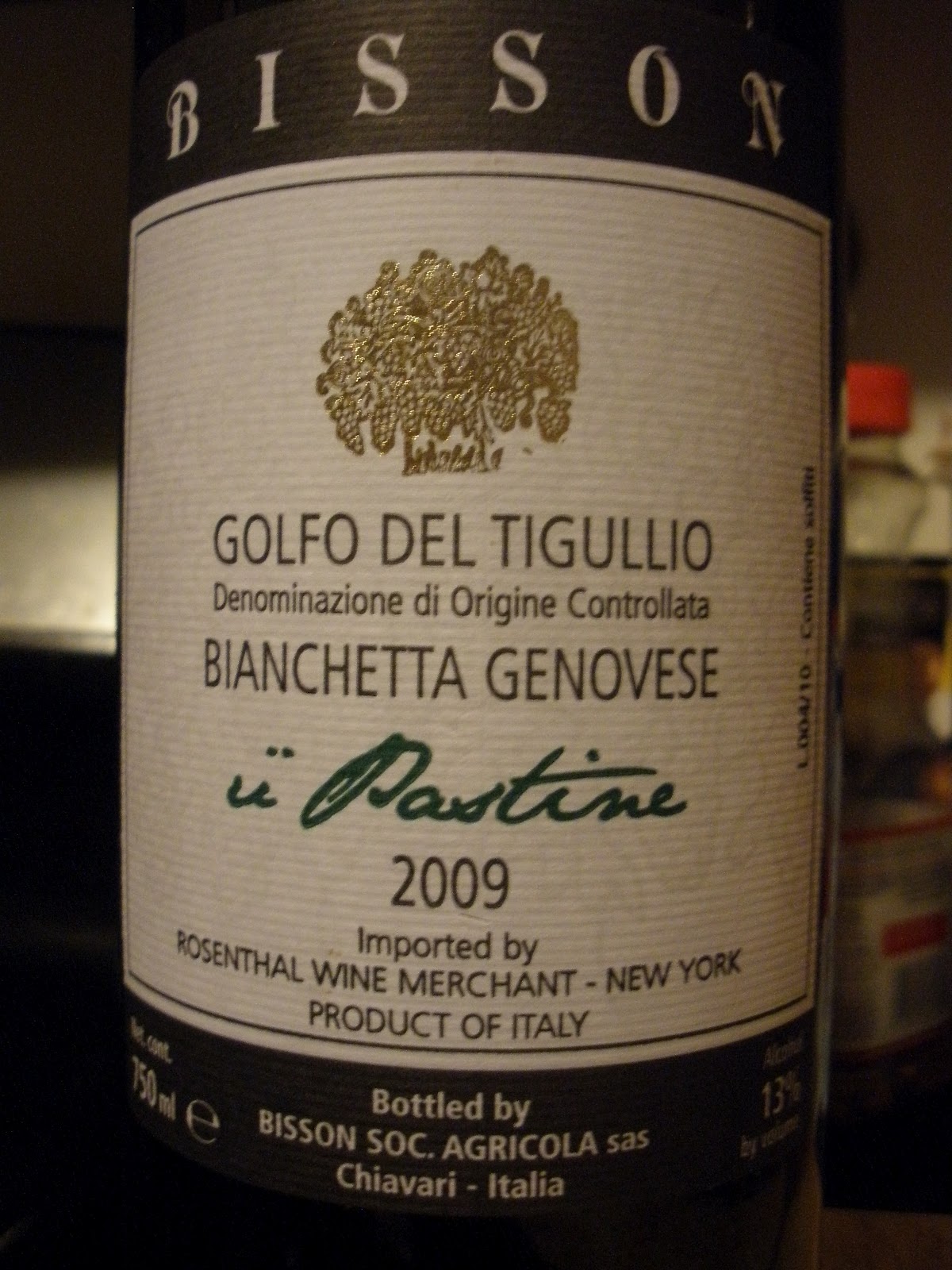
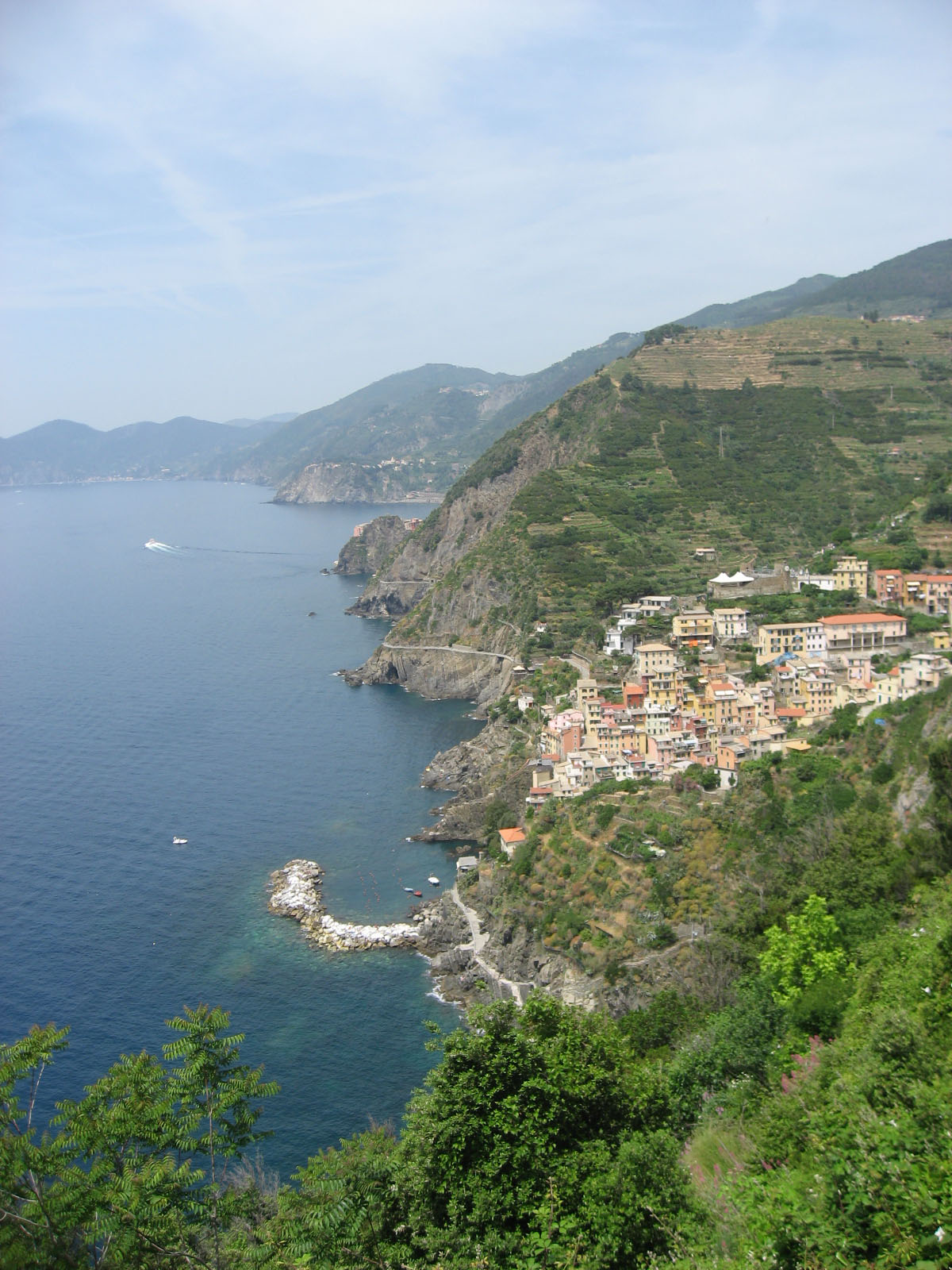
For the most part, when you're talking about the Albarola grape, you're talking about the Cinque Terre region of Liguria. Most wine drinkers who have had a white wine from Liguria have probably had one from Cinque Terre. It's an interesting region that makes some really nice wines, and we'll take a closer look at it later this week, but we're not really interested in that region today because while Albarola is allowed in the wines of Cinque Terre, it cannot make up more than 40% of the blend there. No, today we're interested in the Golfo del Tigullio region, which is a little farther north and west along the bend of the Ligurian coastline. The growing area is based around the Gulf of Tigullio, particularly around the towns of Portofino, Santa Margherita and Rapallo. Here, Albarola is known as Bianchetta Genovese, and DOC wines which indicate Bianchetta Genovese on the label must be made up of at least 85% Bianchetta.
But let's stop for a moment and ask whether Albarola and Bianchetta Genovese are really the same grape. When you search for Bianchetta Genovese on Wikipedia, you are automatically redirected to the page for Albarola where you are told that one of the accepted synonyms for Albarola is Bianchetta Genovese. This is true, but it's not the whole truth. Bianchetta Genovese is also an accepted synonym for a grape called simply "Genovese," according to the
VIVC. Further, Nicolas Belfrage, in his
Barolo to Valpolicella, distinguishes between Albarola and Bianchetta Genovese and writes about them as if they're two separate grapes.
This source, seems to suggest that the grape can be found as a blending component in the wines of Cinque Terre, which would support the argument that it is in fact the same as Albarola.
This source, however, seems to indicate that Bianchetta Genovese is a rare grape rescued from extinction by Pierluigi Lugano, the founder of Enoteca Bisson, who made the wine we'll be looking at below. This story matches the one told on the Bisson
website, which says that Lugano was "led to 'revive' native Ligurian wines that were practically disappeared, such as the 'Bianchetta Genovese.'" None of the literature on Albarola mentions any kind of revival or rescue from extinction, so either Bianchetta Genovese is separate from Albarola and Lugano saved it for the world, or it's really the same grape and all this talk of rescue is based on a mistake.
Which is true? Once again, DNA research comes to the rescue. A study done in 2009 (paper can be found
here) analyzed several different grapes from Liguria as well as grapes from nearby regions of Italy. The research team found that Albarola and Bianchetta Genovese were genetically identical, meaning that they are one and the same grape. There was another vine called Albarola which didn't match the other samples in the study, but this was found to be an obscure local curiosity from Lavagna that isn't used for commercial wine production. Interestingly, this study also found that the
Tibouren grape grown in Provence, France, is the same as the Rossese grape grown around Dolceacqua in Liguria.

The wine I was able to try was the 2009 Bisson "u Pastine," which means something like "very special gift" in the local Ligurian dialect. I picked this bottle up for about $25 locally. In the glass this wine was a fairly deep lemon gold color. The nose was moderately intense with subtle white pear, lemon, citrus peel and white flower aromas. On the palate the wine was medium bodied with medium acidity. There were flavors of pear and lemon fruit along with some bitter lemon peel. The wine had a strong chalky minerality to it, which is something I'm never a particularly big fan of. This grape is mostly found in blends and is rarely bottled on its own, and this wine is a compelling piece of evidence for why that might be the case. Bisson usually makes very good and interesting wines, but this particular bottle just didn't have enough character to keep me engaged. It could have been a little over the hill, and I'd be interested in trying a younger bottle if I happen to run across one on sale, but this is a difficult wine to recommend given my experience with this particular bottle.